Last updated: November 6, 2026 · By Wander Cambodia
 By Sophea Khim · Host & Editor, Wander Cambodia
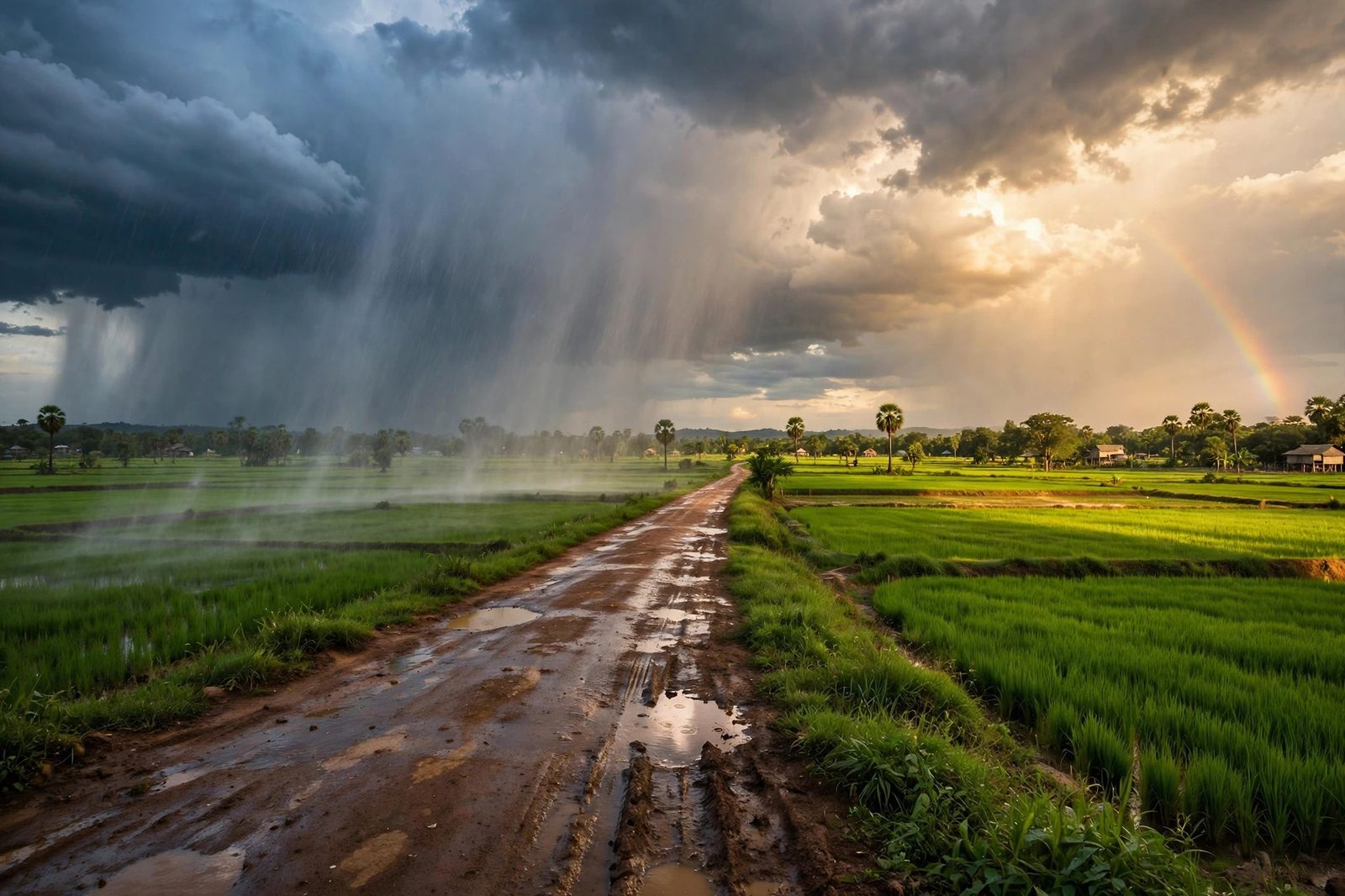
May is the month Cambodia changes colour. The hot season breaks — not all at once, but in a pattern that settles in across the month: still-hot mornings, building clouds, and short, dramatic afternoon downpours that wash the dust off everything and leave the evenings cooler than April's. Daytime highs ease from April's peak to roughly 32–34°C, the rice fields turn on their green almost overnight, and the crowds of the dry season are gone. This guide follows our April and March month guides — May is the first chapter of the other Cambodia, the wet-season one.
Siem Reap and Angkor: the temples in May are a photographer's trade — moody skies, water beginning to fill the moats and barays, far fewer people at the famous frames, and rain that mostly arrives as a late-afternoon event you can plan around rather than a day lost. Start at dawn (our best time to visit Angkor Wat logic still holds), and treat a downpour as a café break, not a cancellation. Phnom Penh: the city gets its evening storms and its relief; the riverfront after rain is the capital at its best. The south coast and islands: May is the honest shoulder — seas are usually still workable early in the month and grow rougher toward June, ferries to Koh Rong and Koh Rong Sanloem run but with less margin for a stormy day, and island plans deserve a flexible last night back on the mainland. The northeast: Mondulkiri and Ratanakiri turn lush first; waterfalls that were threads in March begin to run properly, and the highlands are the coolest, greenest escape in the country this month.
Newcomers imagine the monsoon as weeks of unbroken rain. May's reality, most years, is a rhythm: clear hot mornings, clouds stacking up after lunch, an hour or two of heavy afternoon or evening rain, then a washed, cooler night. Whole rain-out days happen, but they are the exception in May rather than the rule — the relentless stretch of the wet season arrives later, around August and September. Plan like a local and May barely costs you anything: sights and travel in the morning, lunch unhurried, the flexible indoor thing (a museum, a cooking class, the market under cover) held in reserve for the wet slot, and the evening — post-storm, cooler, washed clean — claimed as the best part of the day. Roads feel it before travellers do: the paved highways on the main loops run fine, while dirt-road detours in the provinces get slick early, which is one more reason the northeast rewards a patient schedule this month.
Run the classic loop with the wet-season edits. Siem Reap first on the 14-day itinerary trimmed to your days: temples at dawn, one flexible afternoon kept empty for weather, and the 3-day pass used across its window so a wet afternoon never burns a pass day. Phnom Penh next, run early-and-late with the National Museum and the markets as your rain reserves. Then choose your ending by appetite: the islands early in a May trip rather than late (calmer seas, more ferry margin), or the green northeast — Kratie for the dolphins and Mondulkiri for the hills — where May is an improvement on the dry season, not a compromise. Paperwork is unchanged and boring: the $30 tourist eVisa (or the $35 Ordinary entry if you might stay on), and the free e-Arrival card in the week before you fly.
May is where the green-season discount becomes real. The dry-season ceiling is gone: hotels that held firm from December to March negotiate in May, two-to-three-day lead times secure most rooms outside a holiday spike, and long stays start at rates the high season would not discuss. What does not shrink is the comfort line: humidity makes air-conditioning as non-negotiable as it was in April's heat, and a room you can happily wait out an afternoon storm in — a balcony, a pool, a decent café downstairs — is worth more than the saving on a lesser one. Domestic transport runs to normal schedules on the paved network; book the morning departures the same way you book the morning sightseeing, and the weather becomes a discount instead of a disruption.
May packing is hot-season packing plus the rain layer: the lightest breathable clothes you own, a compact rain jacket or a cheap local poncho bought on arrival, a dry bag that now earns its place daily rather than occasionally, and sandals that survive being soaked. The full reasoning — and the items that cost double if you buy them here — is in buy before you fly; our tested picks for a dry bag and insect repellent matter more in May than in any dry month, because standing water wakes the mosquitoes up weeks before travellers adjust.
Honestly: May is not the month for guaranteed beach weather, glassy island crossings late in the month, or dirt-road adventures on a tight schedule. It is the month for travellers who trade certainty for space — empty temples, green fields, storm-lit evenings and green-season prices — and who are happy to let the afternoon rain, like April's heat before it, set the shape of the day.
Weather figures are long-term May averages for Cambodia's lowlands, checked November 2026. The rains build through the month and vary by year — treat any single week's forecast, not the month's reputation, as the plan.
Yes, if you plan around the afternoon rain. The rainy season begins in May: mornings are usually clear and hot (around 32-34C), downpours arrive mainly in the afternoon or evening, crowds are gone and green-season prices apply. Temples and travel in the morning, flexibility after lunch.
No — May rain is mostly a rhythm of clear mornings and a heavy afternoon or evening downpour of an hour or two, not unbroken rain. Whole wet days happen but are the exception; the heaviest stretch of the wet season comes around August-September.
Usually, early in the month more than late: ferries to Koh Rong and Koh Rong Sanloem run, but seas grow rougher toward June. Put the islands early in a May trip and keep the last night flexible on the mainland.
May in the bigger picture: when is the best time to visit Cambodia — and the June guide below continues this series.
One short email a week with what actually changed on the ground — no fluff, no spam.
Free forever · One email a week · Unsubscribe anytime
Visa rule changes, the best travel deals we find, and new guides — once a week, no spam.
Free forever · Unsubscribe anytime
 Wander Cambodia