Last updated: November 10, 2026 · By Wander Cambodia
 By Sophea Khim · Host & Editor, Wander Cambodia
The best time to visit Cambodia is November to February — the cool dry season, with highs around 28–32°C, the year's lowest humidity, dry roads and calm island seas. March to May is the hot season (April peaks at 35–40°C). The rainy season runs roughly June to October: rain usually falls as a heavy afternoon downpour, landscapes turn green, crowds vanish and prices drop — but the coast gets heavy rain and rural roads get muddy. Shoulder picks: late October and early March balance weather against crowds and cost.
Every Cambodia trip plan starts with this question, and most answers stop at "dry season good, wet season bad." That is too simple to plan with. Cambodia's seasons change what each region does best — Angkor at dawn in January and Angkor in the green season are different trips, and the islands in September are a gamble the temples never are. This page answers the timing questions directly, region by region and month-band by month-band, so you can match your dates to the trip you actually want.
November to February, for the classic trip. The rains have finished, the countryside is still green from them, temperatures sit in the most comfortable band of the year, and everything works at once: temples in good light, the capital's riverfront in the evenings, passable roads to the northeast, and ferries to Koh Rong running on calm water. The cost of perfection is company — December and January are peak season at Angkor, with the highest room prices of the year and sunrise viewpoints you share. Book Siem Reap accommodation ahead in those months; everywhere else, Cambodia absorbs its visitors easily.
Late October and early March are the thinking traveller's compromise. October's end still carries some rain risk but the landscapes are at their greenest and the crowds have not arrived; early March is hot but not yet April-hot, the islands are superb, and prices soften. If your dates are flexible, those shoulders give you most of the dry season's weather at green-season effort.
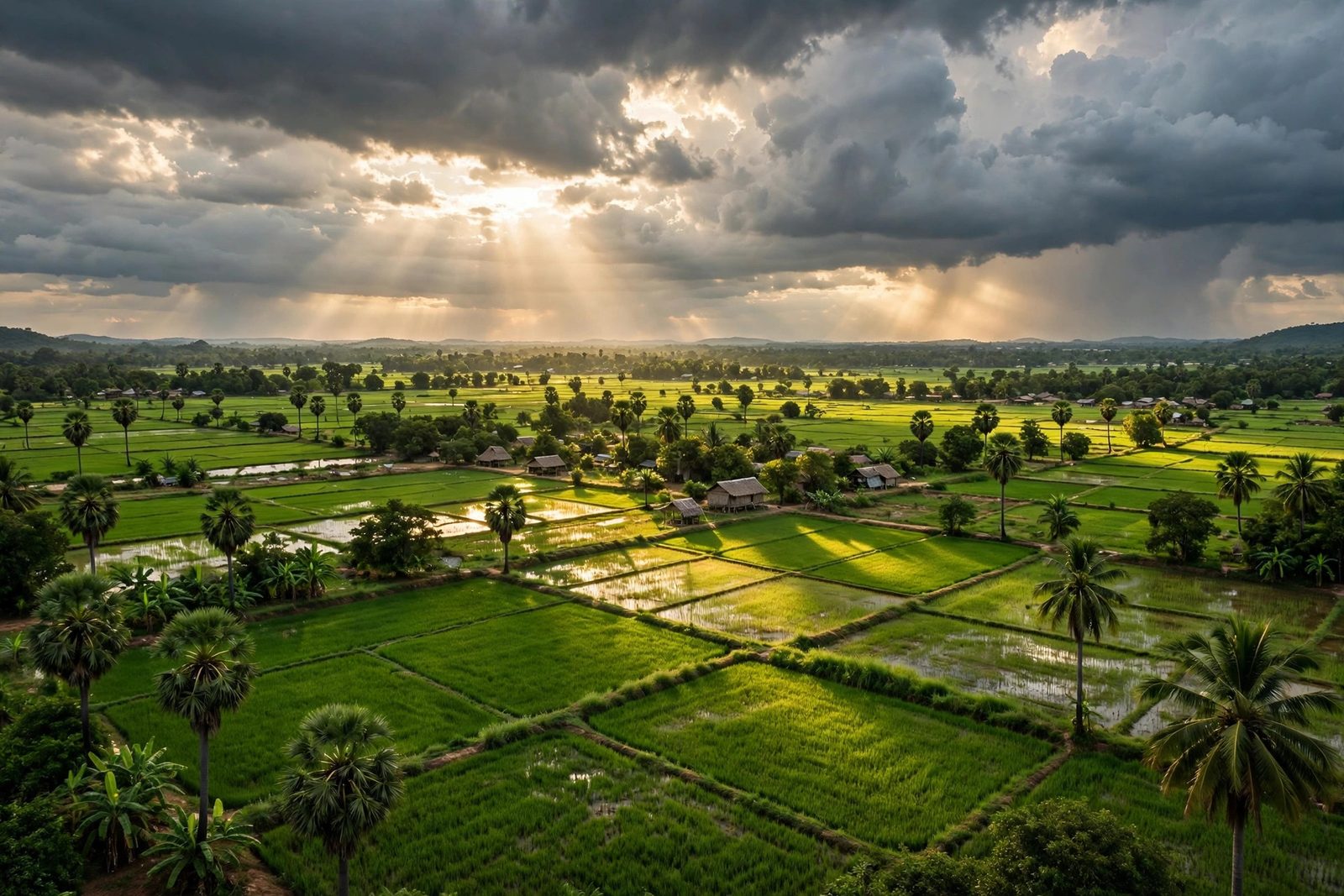
Roughly June to October, with the wider monsoon often dated from May. The pattern surprises first-timers: in most of the country, on most days, rain means one heavy downpour — usually in the afternoon or evening — rather than a washed-out day. Mornings are commonly clear and usable, which is why rainy-season sightseeing works when it is planned early-and-flexible. Rain builds through the season: June and July are comparatively gentle, August to October are the wettest stretch, and September–October bring the flood-season peak, when the Tonle Sap swells to several times its dry-season size and the floating villages near Siem Reap are at their most spectacular.
The exception is the south coast. Around Kampot, Sihanoukville and the islands, the monsoon is materially heavier — roughly double or triple inland rainfall in the wettest months — with rough seas and cancelled ferries a genuine risk from June to September. An inland green-season trip and an island green-season trip are different propositions; plan the first freely and the second with slack at both ends.
March to May is the hot season, and April is usually the hottest month of the year, with lowland highs commonly in the 35–40°C range and humidity building toward the rains. It changes the shape of a day rather than cancelling it: temples and outdoor sights at dawn and again late in the afternoon, the middle of the day surrendered to shade, water and air-conditioning, and a pace that locals — who live this every year — would recognise. Our month guides for April and May plan those months hour by hour. The islands, with sea breeze and swimming on tap, handle the hot season better than the temple plains do.
First trip, temples plus islands: November to February — the only window where both halves are at their best simultaneously. Angkor in depth, on a budget: the green season, June to October — empty temples, moody skies, water in the moats, and the lowest prices of the year; see also our dedicated best time to visit Angkor Wat. The northeast (Mondulkiri, Ratanakiri): November to February for roads that behave, or the late rainy season for waterfalls at full power — read the Banlung and Ratanakiri guide for the trade-off in detail. Festivals: Khmer New Year falls in mid-April, the Water Festival usually in November, and Pchum Ben in September or October — dates move by year, so check the current year's calendar before building a trip around one.
If you can choose freely: late November to early February, booked early for Siem Reap. If your dates are fixed in the rainy season: go anyway, plan mornings, embrace the green, and keep island plans flexible. If your dates are fixed in April: go anyway, plan dawns, and let the middle of the day go. Cambodia does not have a month in which it should not be visited — it has months in which the wrong plan fails. Match the plan to the season and the question answers itself.
Season bands and temperature ranges are long-term Cambodia climate patterns checked November 2026. Individual years vary — a given week's forecast always outranks a season's reputation.
Month by month, the peak of the rains is covered in Cambodia in September.
November to February is the best time to visit Cambodia for most travellers: it is the cool dry season, with daytime highs around 28-32C, the lowest humidity of the year, dry roads everywhere and calm seas for the islands. December and January are the peak of it — and the busiest and most expensive weeks at Angkor.
Cambodia's rainy season runs roughly from June to October (the wider monsoon is often dated May to October). Rain usually arrives as a heavy afternoon or evening downpour of an hour or two rather than all-day rain, with the wettest months typically August to October. The coast and islands get much heavier rain than Siem Reap or Phnom Penh.
March to May is the hot season, with April usually the hottest month — daytime highs commonly reach 35-40C in the lowlands. Temple sightseeing in those months is a dawn-and-late-afternoon activity, with the middle of the day given to shade, water and rest.
No — it is a trade, not a write-off. Rainy season (the green season) brings lush landscapes, full waterfalls, the Tonle Sap at its biggest, far fewer crowds and lower prices, at the cost of muddy rural roads, humid air and rougher island crossings. Mornings are often clear; plan sightseeing early and keep afternoons flexible.
Effectively three: the cool dry season (November to February), the hot dry season (March to May), and the rainy or green season (roughly June to October). Temperatures stay warm year-round — roughly 25-35C — so the real difference between seasons is rain and humidity, not cold.
Month by month: Cambodia in August covers the rainy season near its peak, region by region.
Month by month: Cambodia in October covers the rains’ retreat and the Pchum Ben festival, region by region.
One short email a week with what actually changed on the ground — no fluff, no spam.
Free forever · One email a week · Unsubscribe anytime
Visa rule changes, the best travel deals we find, and new guides — once a week, no spam.
Free forever · Unsubscribe anytime
 Wander Cambodia