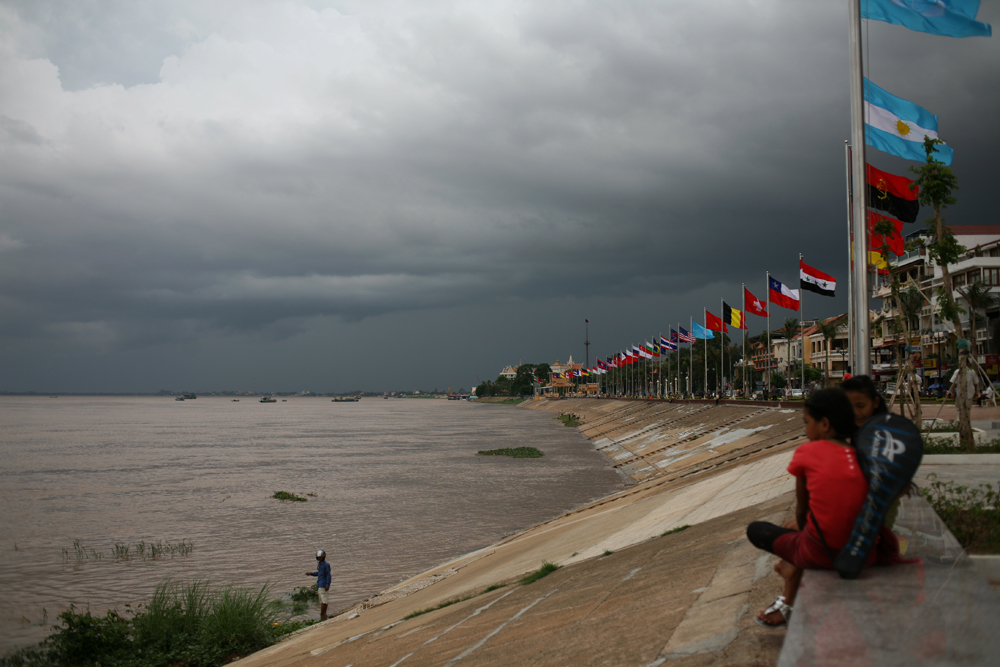
Cambodia's capital gets skipped far too often. Most travelers land, sleep one night and rush to Siem Reap — which means they miss the palace, one of Asia's great small museums, the city's riverside evenings, and the two sites that explain modern Cambodia better than any book. Two days is the sweet spot. Here's how to spend them.
Last updated: October 19, 2026
Give Phnom Penh two full days. Day one: the Royal Palace and Silver Pagoda ($10, mornings or mid-afternoons — it closes over lunch), the National Museum ($10) and a sunset walk along the riverside. Day two: Tuol Sleng and Choeung Ek in the morning while it's cooler and you're fresh, then the markets. Stay on the Riverside for walkable sights or in BKK1 for cafés and quiet. Get around with PassApp or Grab tuk-tuks — short hops around the centre typically run $1–3. Prices and hours below are check-before-you-go: palace hours in particular can change for royal ceremonies.
The Royal Palace is still the King's official residence, and the parts open to visitors — the Throne Hall, the pavilions, the manicured grounds — are the city's postcard shot: golden roofs and spires behind high yellow walls, right on the riverfront. Inside the grounds sits the Silver Pagoda, named for its floor of more than 5,000 silver tiles. Its treasures include a life-size gold Buddha studded with 9,584 diamonds and the smaller Emerald Buddha. It's genuinely impressive, and compact enough to see in one to two hours.
Five minutes' walk from the palace, the National Museum holds the world's largest collection of Khmer art — Angkorian sculpture, bronzes and ceramics in a beautiful terracotta building arranged around a garden courtyard. Go before Angkor if you can: the statues here put faces and names to what you'll see in the temples, and the temples make far more sense afterwards. Entry is around $10; allow one to two hours. Photography inside is limited and may carry a small extra fee.
Wat Phnom — the temple on the city's only hill (27 metres, and Phnom Penh is flat enough that this counts as a summit) — is where the city's founding legend lives, and it's a pleasant leafy stop near the riverside. Entry for foreigners is about $1. The Independence Monument, a lotus-shaped tower on Norodom Boulevard, is a free photo stop best seen on a drive-by or an evening walk; it's a landmark, not a half-day plan.
Between 1975 and 1979, the Khmer Rouge regime killed roughly a quarter of Cambodia's population. Two sites in Phnom Penh document it, and visiting them — respectfully, at your own pace — is the single most important thing many travelers do in this country. This isn't a "dark tourism" thrill stop; it's a memorial, and it should be approached like one.
Practical notes, plainly: do the two together in one morning, starting early — the heat at Choeung Ek is real, and you'll want the emotional space afterwards rather than a packed afternoon. Keep voices down, dress modestly, don't pose for smiling photos at the stupa or graves, and think carefully before bringing young children. A small number of S-21 survivors sometimes spend time at Tuol Sleng, where their memoirs are sold — buying one is a direct, dignified way to support them. Many visitors plan something gentle for the rest of the day. That's not weakness; that's the correct response.
When the heat breaks, Phnom Penh heads to the water. Sisowath Quay, the promenade along the Tonlé Sap river, fills with families, food carts and exercise groups at dusk. Short sunset river cruises leave from the riverside jetties — the basic shared boats typically run from around $5 a head for an hour on the water (check what's included before you board; drinks and "sunset packages" vary wildly).
Wherever you base, Phnom Penh hotel prices are gentle by capital-city standards — the mid-range goes a long way here.
Phnom Penh is not a dangerous city for tourists, but it does have one signature crime: bag and phone snatching by riders on passing motorbikes, worst around the riverside and busy junctions. The defences are boring and effective — bag worn crossbody on the building side of the pavement, phone kept away from the road edge when you're in a tuk-tuk (not held up filming at arm's length), valuables in the hotel safe. Beyond that: use app-booked rides at night, carry small USD bills for change, and treat the traffic itself as the main hazard — look both ways, then look again, then cross at a steady pace and let the flow go around you. It works; everyone here does it that way.
Two full days covers the core well: the Royal Palace, National Museum and Wat Phnom at a relaxed pace on day one, then Tuol Sleng and Choeung Ek plus the markets on day two. One day is possible if you prioritise, but the palace's split opening hours (it closes over lunch) make a single-day sprint tight.
Entry for foreign visitors is $10 and includes the Silver Pagoda grounds. The palace typically opens 8:00–11:00am and 2:00–5:00pm — it closes over lunch, and occasionally closes without much notice for royal ceremonies, so check before you go. Shoulders and knees must be covered.
Generally yes, with ordinary big-city awareness. The most common problem is bag and phone snatching by riders on passing motorbikes: wear bags crossbody on the building side of the pavement, keep your phone away from the road edge in tuk-tuks, and use ride-hailing apps like PassApp or Grab so prices are fixed in advance. Violent crime against tourists is uncommon.
Yes — they're usually paired in a half day. Tuol Sleng (the S-21 prison museum) is in the city; Choeung Ek is about 15 km south, roughly 30–45 minutes by tuk-tuk. Audio guides are available at both and are strongly recommended. Entry is around $5 for Tuol Sleng and around $3 for Choeung Ek, with audio guides extra. Allow time afterwards to decompress — it's heavy going.
For a first visit, the Riverside (Sisowath Quay) puts the Royal Palace, National Museum, markets and the riverfront promenade within walking distance. BKK1 (Boeung Keng Kang 1), just south of the centre, is quieter and café-filled, popular with expats. The Russian Market area (Tuol Tom Pong) is a good third option for a more local feel.
Flights now use Techo International Airport (KTI), south of the city, which replaced the old PNH airport in September 2025. Allow around an hour's drive into the centre depending on traffic. Fixed-rate taxis and ride-hailing app cars are the straightforward options; agree or check the price before you set off.
Next stop for most people: Siem Reap & Angkor. More city and town guides live on the Places hub.
One short email a week with what actually changed on the ground — no fluff, no spam.
Free forever · One email a week · Unsubscribe anytime
Visa rule changes, the best travel deals we find, and new guides — once a week, no spam.
Free forever · Unsubscribe anytime
 Wander Cambodia