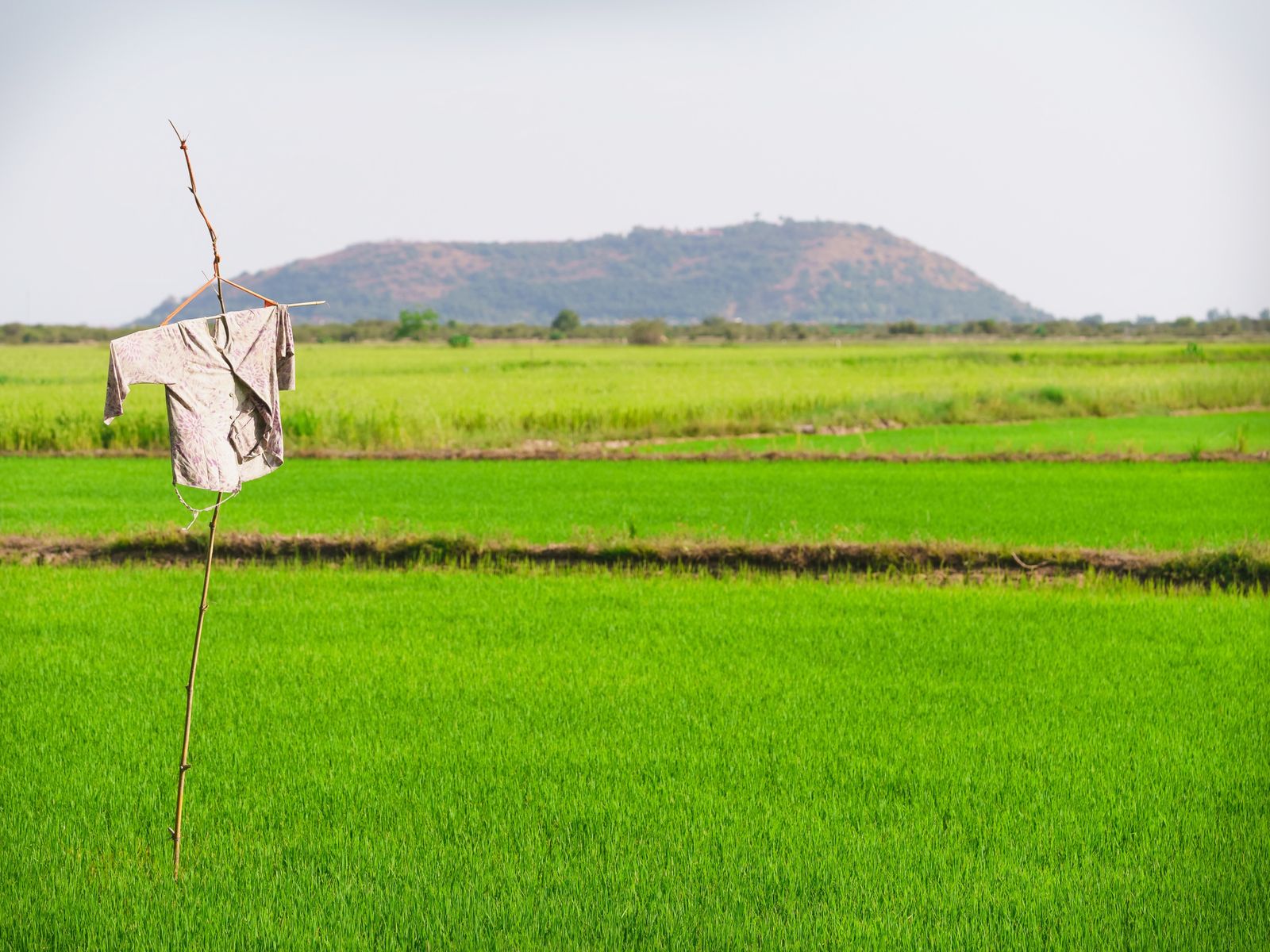
Mondulkiri is Cambodia turned on its head: cool evenings, pine-covered hills, red dust roads and elephants walking through forest with Bunong guides. If the heat of the lowlands has worn you down, Sen Monorom — the small, friendly capital of this huge eastern province — is the place to breathe out again.
Last updated: October 23, 2026
 By Sophea Khim · Host & Editor, Wander Cambodia
Mondulkiri is Cambodia's largest province and one of its least densely populated — a high plateau in the east, on the border with Vietnam. Base yourself in Sen Monorom for 2–3 nights. Spend a day with an ethical, observation-only elephant project, visit Bou Sraa waterfall about 40–45 km from town, catch sunrise over the Sea Forest ridges, and pack a jumper — from November to February it is genuinely cool after dark. Getting there is by road only, a long day from Phnom Penh, so do not try it as a day trip.
Most visitors picture Cambodia as flat: rice paddies to the horizon, the Mekong and Tonle Sap, temples rising from the plain. Mondulkiri breaks that picture completely. This is a plateau, high enough that the air changes. The hills roll instead of lying flat, pine trees mix in with jungle, and in the dry season the grass turns gold. In the wet season everything is deep, vivid green.
It is also empty in a way the rest of the country is not. Mondulkiri is the largest province by area and one of the least densely populated, so distances feel bigger, towns feel smaller, and the forest still feels like forest. Sen Monorom, the provincial capital, is really a small highland town stretched along a main road — guesthouses, a market, a few cafes and restaurants, and hills in every direction. That simplicity is the point. People come here to slow down.
Mondulkiri is home to the Bunong people, also spelled Pnong, who have lived in these hills for generations and have worked with elephants for as long as anyone can remember. Much of the best guiding, trekking and elephant work in the province is Bunong-led, and travelling here with respect for that culture — asking before taking photos, dressing modestly in villages, and choosing Bunong guides where you can — makes the trip better for everyone.
If you are building a wider route, Mondulkiri pairs naturally with a slower loop through the provinces rather than a rushed temple run. Compare it with Battambang for laid-back provincial life in the west, or Kampot and Kep for riverside and coastal highlands in the south. Each corner of Cambodia feels distinct — Mondulkiri is the wild, cool, eastern one. Start from the full Places guide to see how they fit together.
You will not fill a Mondulkiri itinerary with sights every hour, and you should not try. The rhythm here is one main activity a day, done properly, with time left for coffee, viewpoints and doing very little.
This is the part to get right. Elephants are central to Bunong culture — historically working animals, companions and a deep part of community life. Today the best-known projects, such as the Elephant Valley Project, work on a simple, clear model: observation only.
That means you walk with the herd through the forest at the elephants' pace. You watch them feed, scratch, socialise and wander down to bathe in the river. You do not ride them. You do not pose on them. You do not expect tricks or shows. Guides — often Bunong mahouts and forest guides — explain each elephant's history, health and personality, and why retirement and forest time matter for animals that may have spent years working.
It can sound less exciting than a ride, until you do it. Watching an elephant choose its own path through the trees, hearing it communicate with the rest of the herd, and seeing bathing time on its own terms is far more memorable than ten minutes on a seat. It is also the only model that puts the animal first.
The red flag is simple: any operator offering rides is one to walk away from. The same goes for shows, painting, or elephants kept on short chains for photos. Ask direct questions before you book: Can I ride? If the answer is yes, do not book. How many hours do the elephants spend loose in the forest? The better the answer, the better the project. Book ahead in the November to February peak — the good projects keep group sizes small and they do fill up.
Bou Sraa is the waterfall people cross the province for, and it earns the trip. About 40–45 km from Sen Monorom on a road that winds through hills and forest, it drops in two tiers into a deep, green gorge. It is widely described as Cambodia's most celebrated waterfall, and standing at the viewpoint when the river is full, you understand why — the sound reaches you before the view does.
Timing matters. Bou Sraa is most powerful in October and November, right after the rainy season, when the river is swollen. That is the spectacular version: heavy water, spray in the air, and a gorge that feels alive. Later in the dry season the falls are calmer and clearer, better for a relaxed visit and photos, but less dramatic. Both are worth seeing — just set your expectations to the season.
Allow half a day for Bou Sraa, including the drive each way, and combine it with viewpoints on the same road. Wear shoes with grip, keep a firm hold on phones near wet rock, and take all rubbish back with you. Smaller waterfalls closer to Sen Monorom make easier, shorter trips if you have a spare afternoon — ask locally about current conditions, because tracks and access change with the rains.
November to February is the best all-round window. Roads are dry and in their best condition, skies are clear, waterfalls still have good flow at the start of the window, and evenings are properly cool — jumper weather after dark, which feels like a small miracle after Phnom Penh or Siem Reap. This is peak season for a reason, so book elephant projects and good guesthouses ahead.
October to November, just after the rains, is the waterfall season — Bou Sraa at full power, hills at their greenest, but with a trade-off: some roads and forest tracks can still be rough, muddy or slow. March to May gets hotter and drier; the highlands are still cooler than the lowlands, but the landscape turns dusty and waterfalls shrink. In the rainy season, roughly June to September, Mondulkiri is lush and quiet, but travel is slower and trekking is muddier — fine if you have time and patience, frustrating if you do not.
Stay 2–3 nights. One night is a rush that does the province a disservice: you arrive tired after a long road day, squeeze in one activity, and leave. Two nights lets you do elephants one day and Bou Sraa the next. Three nights adds a trek or a proper rest day, which suits the place. If you fall for the hills — many people do — longer stays are easy and cheap to arrange once you are there.
Getting there is by road only. There is no airport in Mondulkiri, and no shortcut. From Phnom Penh, buses and shared vans run to Sen Monorom and it is a long day — leave early, expect stops, and keep expectations set for a travel day rather than a sightseeing day. From other provinces, most routes still funnel through Phnom Penh or long cross-country roads, so check connections carefully and avoid tight onward plans the same evening. On arrival, eat, sleep, and start fresh in the cool morning — that first highland morning is worth the journey on its own.
Heading northeast in either direction, pair this with Kratie — the Mekong dolphin town a few hours west, and the natural other half of a northeast loop.
Yes, if you have the time for it. Mondulkiri feels completely different from lowland Cambodia — cooler air, rolling green hills, pine forest and red-earth roads. It is a long day on the road to get there, so it works best as a 2 to 3 night stop, not a day trip. Go for the elephants, the waterfalls and the slower pace, not for nightlife or temples.
You should not, and the ethical projects do not allow it. Riding damages an elephant's back over time and the best projects in Mondulkiri are observation-only — you walk with the herd, watch them feed and bathe, and learn from Bunong guides. Any operator offering rides, shows or tricks is a red flag. Choose an observation-only project instead.
November to February is the best all-round window — roads are dry, days are clear and evenings are cool enough for a jumper. October to November, just after the rains, is when Bou Sraa and the other waterfalls are at their most powerful, though roads can still be rough in places. March to May gets hotter and drier, and the rainy season makes some tracks slow and muddy.
By road only. There is no airport in Mondulkiri. Most visitors travel from Phnom Penh by bus or shared van — it is a long day, so start early, break up the journey if you can, and do not plan anything demanding for your arrival evening. Book a morning departure and keep water and snacks with you.
Two to three nights is the sweet spot for most people. That gives you one full day for an ethical elephant project, half a day for Bou Sraa waterfall and the viewpoints, and time to enjoy the cool evenings in Sen Monorom without rushing. Stay longer if you want multi-day jungle trekking with Bunong guides.
Pack layers. Even when lowland Cambodia is hot, Sen Monorom can be jumper weather after dark from November to February. Bring sturdy walking shoes for forest tracks, rain protection just after the wet season, sun protection for the open ridges, and cash — card acceptance is limited and ATMs can be scarce outside town.
Mondulkiri rewards travellers who slow down. Give it two or three nights, walk with the elephants the right way, and stand in the spray at Bou Sraa — then head back to the Places hub to plan where in Cambodia calls you next.
One short email a week with what actually changed on the ground — no fluff, no spam.
Free forever · One email a week · Unsubscribe anytime
Visa rule changes, the best travel deals we find, and new guides — once a week, no spam.
Free forever · Unsubscribe anytime
 Wander Cambodia