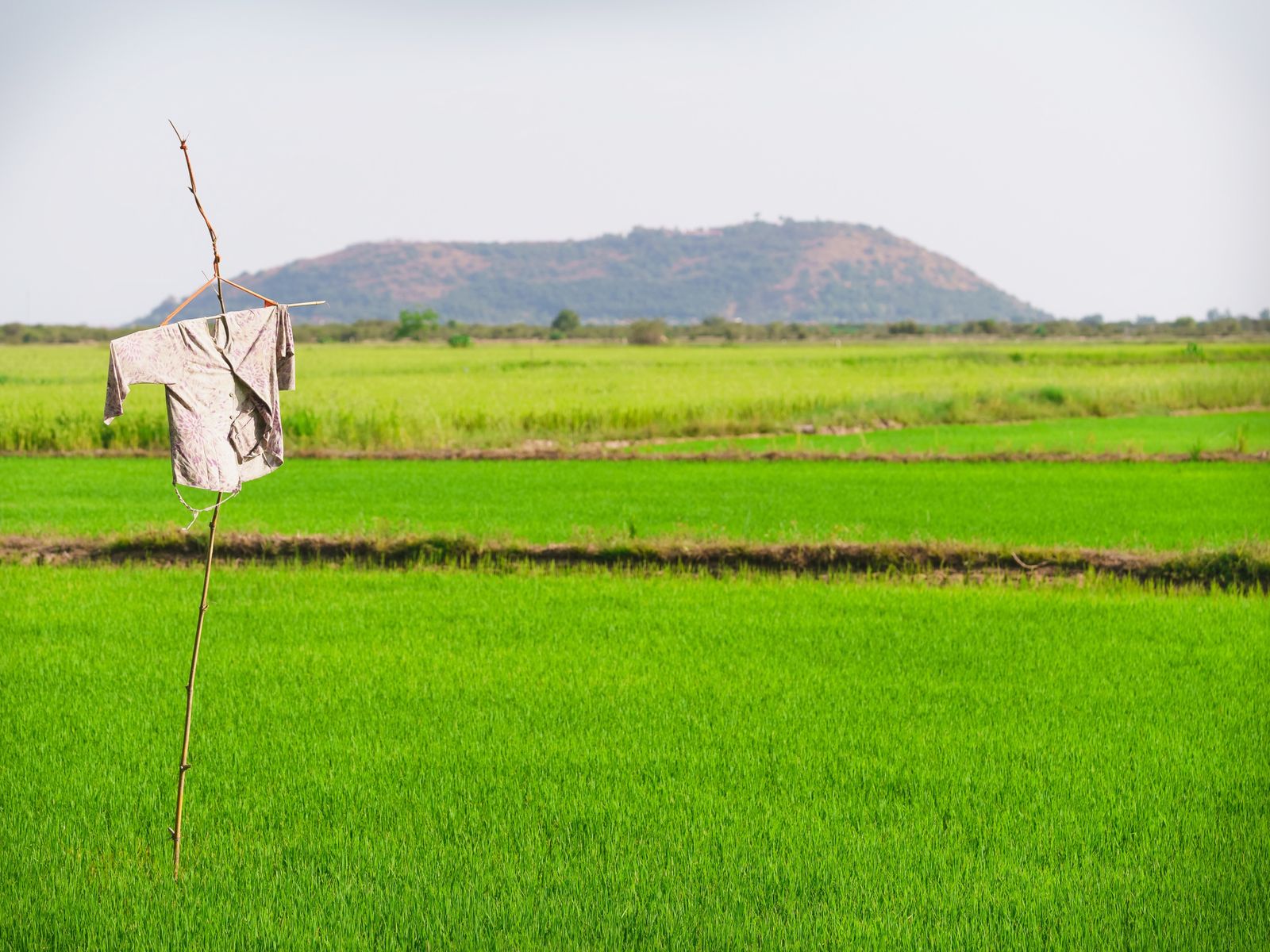
Cambodia's second city plays a completely different game from Siem Reap: no temple crowds, no Pub Street — just a sleepy colonial riverfront, the country's best-preserved old town, a famous DIY railway in the rice fields, and millions of bats pouring out of a cave every sunset. Here's how to do it justice.
Last updated: October 19, 2026
Give Battambang two nights. Ride the bamboo train (norry) — yes, it's still running, in two versions, about $5 a person — wander the French colonial streets along the Sangker River, then end a day at Phnom Sampeau, where millions of bats stream out of the cave at dusk. Add Prasat Banan and a night at the Phare Ponleu Selpak circus if you stay the second day. Getting there is easy: 3–4 hours by bus from Siem Reap (about $7–13), or 5–6 hours from Phnom Penh.
The norry started as pure necessity. After Cambodia's railways fell apart in the civil-war years, villagers built their own transport: a bamboo platform on two rail axles, powered by a small motor, that could be lifted clean off the track in seconds. For decades these rattling contraptions were real rural transport — and the single-track etiquette survives today: when two norries meet, the crew of the lighter one dismantles it on the spot, lets the other pass, and rebuilds it. That 60-second dance is half the fun.
The part most guides get wrong is that there are now two different bamboo trains, and they are not the same experience:
Either way, foreign visitors pay about $5 per person (the Banan line charges Cambodian riders less, around $2.50), and a ride runs roughly 20–40 minutes depending on traffic on the line. Before you set off, confirm with your driver which bamboo train he means — the disappointing "that's it?" reviews online are mostly people who were taken to the newer line expecting the original. Our tuk-tuks and ride apps guide covers how a full-day tuk-tuk hire (the standard way to see Battambang's spread-out sights) is priced elsewhere in Cambodia.
Battambang has the best-preserved French colonial streetscape in Cambodia, and the right way to see it is slowly, on foot, in the early morning or late afternoon. The riverfront blocks along the Sangker River (Streets 1, 2 and 3) are lined with century-old shophouses, many now cafés, galleries and small hotels. Don't miss Psar Nat, the art-deco central market from 1937, or the Governor's Residence with its Italianate facade. Street 2½, a lane near the market, is the arty heart of things — galleries, coffee, and the kind of quiet that Siem Reap lost years ago.
The city was a prosperous trading town long before the French, sat in Thai hands for over a century until 1907, and still feels like a working Cambodian provincial capital rather than a tourist set. That's the appeal.
About 12 km southwest of town, the limestone hill of Phnom Sampeau packs a full afternoon into one stop. On and around the hill: temples and viewpoints on top, troops of monkeys, and — handled with the respect it deserves — the Killing Cave, where victims of the Khmer Rouge were murdered and thrown from a skylight above; a memorial stupa and a reclining Buddha now mark the site. Guides explain the history soberly, and most visitors find it one of the more affecting memorials in the country. Small entry fees apply on the hill (around $1, ballpark).
Then, at dusk, the main event. At the base of the hill is the famous bat cave: as the light fades, millions of wrinkle-lipped bats pour out in a single undulating ribbon, streaming across the fields toward the Tonle Sap to feed — a flow that can run for half an hour or more. Cafés and drink stalls at the base rent you a plastic chair and a cold drink for the show. Aim to be seated by about 5pm; the exodus tracks sunset, so it starts earlier in the dry-season months. A tuk-tuk from town, a walk up the hill, the cave, the bats and the ride home is the classic Battambang half-day.
About 20–25 km south of the city, Prasat Banan is an 11th-century Angkor-era temple on a hilltop — five towers in a quincunx arrangement, reached by a stairway of roughly 358 steps. It's a miniature of the Angkor style a century or so before Angkor Wat, with wide views over the plains from the top and none of the crowds. Entry is a couple of dollars (ballpark). Because the Banan bamboo train boards at the base of the same hill, the two pair into an easy morning loop; add Ek Phnom, an older, moodier temple ruin north of town, if you have a second day.
Battambang's creative reputation isn't marketing fluff — it has a genuine engine. Phare Ponleu Selpak is a Cambodian NGO arts school founded by former refugee-camp students; its professional circus troupe performs high-energy shows mixing acrobatics, theatre and live music under a big top on the school grounds — the same Phare family whose Siem Reap circus travelers rave about, in a more intimate hometown setting. Performances run on selected evenings (commonly a few nights a week) and tickets are typically in the $10–15 range — check the current schedule when you arrive, because nights rotate. Around Street 2½ and the old town, independent galleries and cafés show work from the city's deep bench of painters and printmakers. Battambang produces a remarkable share of Cambodia's contemporary artists; an evening here makes it obvious why.
Stay near the riverfront and Psar Nat — Streets 1–3 and the lanes around them — and everything in town is walkable. Battambang is a budget-friendly city: comfortable small hotels and guesthouses cluster in the old town in roughly the $10–40 range, with a handful of boutique properties above that.
| From | Option | Typical time | Typical price |
|---|---|---|---|
| Siem Reap | Bus / minivan (~170 km via Sisophon) | 3–4 hours | $7–13 |
| Siem Reap | Boat (high-water season) | 6–10 hours, unpredictable | ~$20–25 |
| Siem Reap | Private car | ~3 hours | Per-car rates; split it 3–4 ways |
| Phnom Penh | Bus / minivan (~300 km on Highway 5) | 5–6 hours | $8–15 |
| Phnom Penh | Train (Royal Railway northern line) | ~6.5–8 hours | ~$8–9 |
Prices are typical ranges reported by operators and booking platforms in October 2026. Fares drift with season and holidays — treat this as a fair-price compass, not a contract.
The boat from Siem Reap deserves its own word: it crosses the Tonle Sap and winds up the Sangker River past floating villages and stilted fishing communities, docking right in Battambang. In good water it's one of Cambodia's great slow journeys; in the dry season it's slower, can ground on sandbars, and may swap the last stretch for a minivan. Take it for the trip, not the timetable — and if you're pairing it with Angkor, our Siem Reap & Angkor guide is the place to plan the temple days. The train from Phnom Penh is the other romantic option: the northern line runs via Pursat at a gentle pace with countryside views the highway can't match, a sibling experience to the road options compared in our Phnom Penh to Siem Reap guide. From the capital, staying a night or two in Battambang also breaks the journey west nicely — see the Phnom Penh guide for the other end of the line.
One onward-travel warning: Battambang is the traditional gateway to the Poipet border with Thailand — but as of now all Thailand land crossings are closed, so that onward leg doesn't exist. Check the current border status before building any route around it.
Yes — in two places. The original norry line just outside town, shut in 2017 while the railway was rebuilt, has been reinstated and runs between scheduled trains. A second, purpose-built tourist line near Phnom Banan opened in 2018. Foreign visitors pay about $5 per person at either; at the Banan line, Cambodian riders pay less. Schedules at the original line depend on the real trains, so going in the morning gives you the best chance of a ride without a long wait.
The original runs on the real railway a few kilometres from the city centre: a rattling bamboo platform over rice fields, with the famous dismantle-and-reassemble dance when two norries meet. The newer line is a purpose-built 4 km tourist track at the base of Phnom Banan, about 20 km south — more manicured, and it pairs naturally with the Banan temple visit. Most travelers chasing the classic experience prefer the original; confirm which one your driver means before you set off.
Two nights is the sweet spot. One full day covers the bamboo train, the old town and Phnom Sampeau for the bat exodus; a second day adds Prasat Banan, Ek Phnom and an evening circus performance without rushing. A single night works if you arrive by early afternoon and head straight out to the sights — but a day trip from Siem Reap, at 3–4 hours each way, short-changes the place.
At dusk, as the light fades — roughly 5:30–6:30pm depending on the season. Millions of wrinkle-lipped bats pour out of the cave in a continuous ribbon that can stream for 30 minutes or more, heading for the Tonle Sap to feed. Aim to be settled at the cafés at the base of the hill by about 5pm, and combine the trip with the Killing Cave and hilltop temples earlier in the afternoon.
The bus or minivan is the default: about 170 km via Sisophon, 3–4 hours, typically $7–13. A private car takes around 3 hours. In high-water season a boat does the trip via the Sangker River and the Tonle Sap — scenic and memorable, but slow and unpredictable at roughly 6–10 hours, and in the dry season it may finish the last stretch by road. There is no railway and no flight between the two cities.
Both, if you have the time — they are completely different trips. Angkor is monumental ancient history; Battambang is living Cambodia: a working rice-bowl city with colonial streets, countryside day trips, a famous circus school and very few tour buses. Travelers with four or more days in the northwest are rarely sorry they split them between the two.
Battambang pairs naturally with Siem Reap and Angkor — temples first or city first, the bus runs both ways all day. More destinations, from the capital to the islands, live in Places.
One short email a week with what actually changed on the ground — no fluff, no spam.
Free forever · One email a week · Unsubscribe anytime
Visa rule changes, the best travel deals we find, and new guides — once a week, no spam.
Free forever · Unsubscribe anytime
 Wander Cambodia