Last updated: October 31, 2026 · By Wander Cambodia
 By Sophea Khim · Host & Editor, Wander Cambodia
Most visitors cross Cambodia west to east — Phnom Penh, then Angkor. Kratie is the other direction: a small French-era river town in the northeast where the main event is a pod of endangered Irrawaddy dolphins in a deep pool upstream, and the second event is a bicycle ride around a car-free island. Nothing here is spectacular in the Angkor sense. That is the point. Kratie is where you go to watch the Mekong do its work for a day or two.
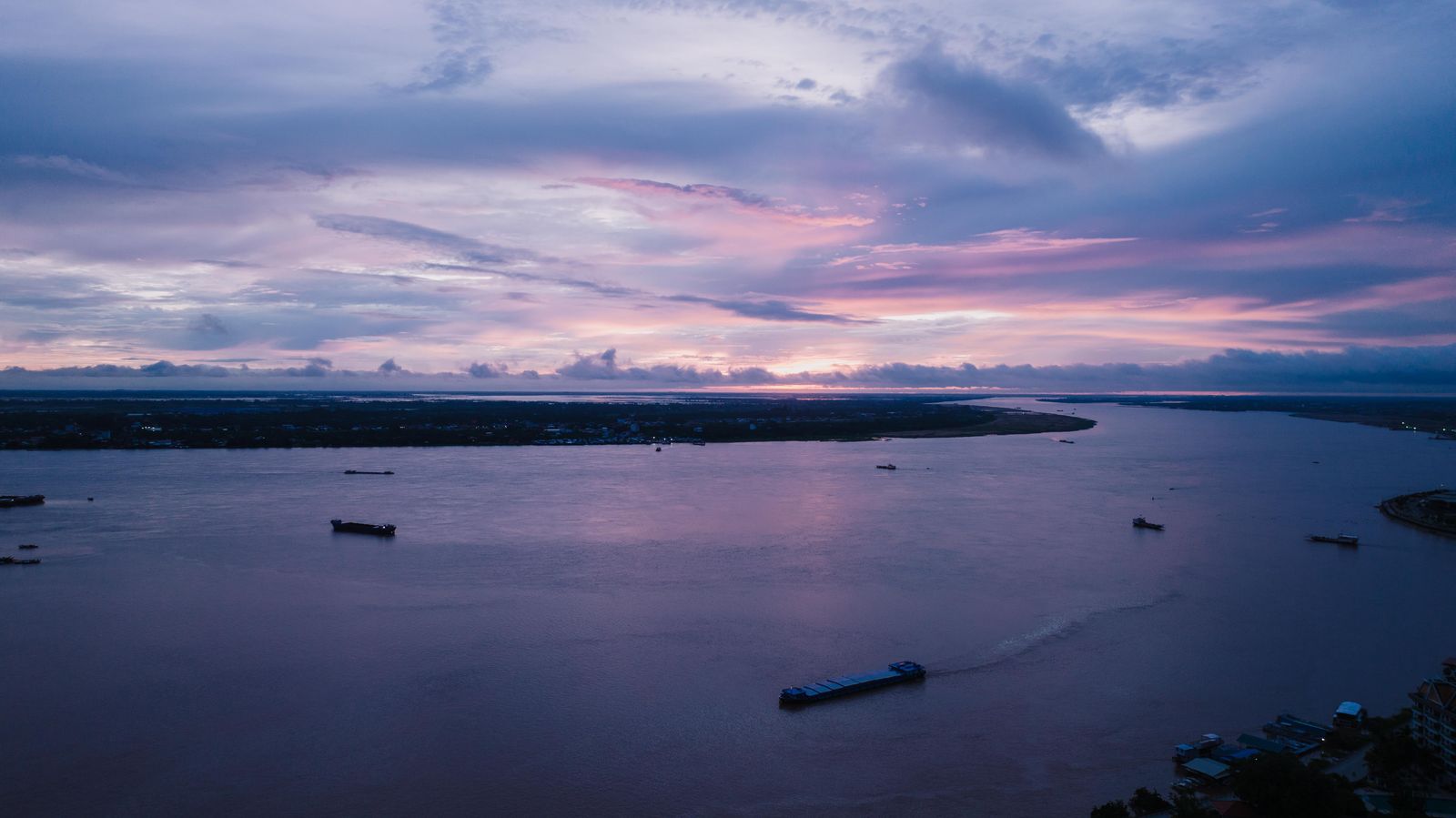
Three reasons, in order. First, the dolphins: the Mekong population of Irrawaddy dolphins is critically endangered and numbers only in the dozens, and the pool at Kampi, about 15 kilometres north of town, is the most reliable place in Cambodia to see them. Second, Koh Trong: a river island directly opposite town, reached by a short ferry, that you can cycle around in a couple of hours past pomelo orchards, stilt houses and rice fields. Third, the pace: Kratie kept much of its colonial-era riverfront, its market is a working market rather than a souvenir one, and the sunset over the river is the scheduled entertainment. If your route runs between Phnom Penh and the Laos border, Kratie is also the natural overnight break — the same corridor our Tropaeng Kreal border walkthrough covers at its northern end.
Kampi village sits roughly 15 kilometres north of Kratie town, a 20 to 30 minute tuk-tuk ride. From the Kampi landing, small boats take visitors out to the deep pool where the dolphins gather. The honest expectations: you will almost certainly see dolphins, because the pool is their home water, but you will see them the way you see wild animals — a rounded back, a small dorsal fin, a breath, then gone. There is no jumping, no feeding and no touching, and a good boat operator cuts the engine near the pool and lets the current do the work. Choose the operator who keeps distance without being asked; ticket income here funds the community guarding that keeps this pool protected, which is why the per-person boat fee is money well spent. Early morning and late afternoon are the best light and the calmest water. The dry season, roughly December to May, concentrates the dolphins in the deep pools as water levels fall, and gives the best chance of close, repeated sightings. Pair the trip with Phnom Sambok, a small hilltop pagoda on the same road, for the view back over the floodplain.
The local ferry crosses from the town riverfront to Koh Trong in a few minutes and runs through the day. The island is a long sand island in the middle of the Mekong with a concrete loop path of about 9 kilometres around it — an easy, flat bicycle ride of one to two hours with stops. Rent a bicycle in town and take it on the ferry, or rent on the island near the landing. The loop passes pomelo orchards — Koh Trong pomelos are famous in Cambodia — traditional wooden houses, market gardens and, at the southern tip, a Vietnamese floating village. There are homestays and a couple of small lodges on the island if you want the night version: no traffic noise, dinner cooked by the family, and the river on both sides. Sunset from the island's west bank, looking back at the town, is the photograph everyone takes, and it deserves it.
Walk the riverfront promenade in the late afternoon, when the town comes out to exercise, snack and watch the water. The central market and the streets behind the riverfront keep their French-era shophouses. South of town, Wat Roka Kandal is one of Cambodia's oldest wooden temples. North, beyond Kampi at Sambor — about 36 kilometres from town — Wat Sorsor Muoy Roy, the 100 Pillar Pagoda, anchors a longer half-day trip that combines naturally with the dolphins. And eat kralan: bamboo tubes of sticky rice with coconut milk and black beans, roasted over charcoal at roadside stalls. Kratie is famous for it across Cambodia, and the stalls on the road to Kampi sell it hot.
Kratie is roughly four to five hours by road from Phnom Penh, heading northeast — buses and shared taxis run the route daily, and the road leg is covered in the same practical spirit as our Phnom Penh to Siem Reap comparison: book a morning departure, keep water and small bills handy, and expect the advertised time to be optimistic. One night is the minimum that makes sense — dolphins at dawn or dusk and the island in between. Two nights is better: it removes the rush, lets a cloudy dolphin morning be retried, and leaves room for Sambor. Kratie also pairs with Mondulkiri to the east for a northeast loop most visitors never take. Money works the same here as everywhere in the country — dollars and riel side by side, small notes for ferries and stalls — see money in Cambodia before you go.
A few small things decide whether the Kampi trip is the highlight people promise. Hire the tuk-tuk for the return trip as well as the ride out — Kampi is a village landing, not a rank, and the driver who took you there is your reliable way back, usually combined with the Phnom Sambok stop on the same road. Take the boat in the first or last light of the day: midday heat flattens the river, the light turns harsh, and the whole experience becomes a squint. Bring small dollar bills for the boat fee and the ferry, water for the island ride, and a hat with no apology — there is very little shade on the water. Photography is welcome, but a phone at arm's length over the side of a small boat, reaching for a fin that surfaced ten metres away, produces exactly the photo you expect. Sit still, watch where the boatman watches — he reads the breathing pattern long before you see anything — and let the dolphins come to the surface on their own terms. That patience, more than the camera, is what a respectful dolphin pool asks of you, and it is why the visit stays with people.
No, and distrust anyone who does. The Kampi pool is home water for a resident pod, so sightings are the norm rather than the exception — but these are wild, endangered animals surfacing on their own schedule, at a respectful distance.
The dry season, roughly December to May: lower water concentrates the dolphins in the deep pools, Koh Trong's beaches and paths are at their best, and the road from Phnom Penh is in its easiest condition.
On a one-week first trip built around Phnom Penh and Angkor, honestly, no — the detour costs a day each way in travel feel. On two weeks or more, or on any route heading toward Laos, it is one of the best-value stops in the country.
Facts checked October 2026 against current travel sources. Dolphin numbers are small and change; local conservation staff at Kampi have the current count.
One short email a week with what actually changed on the ground — no fluff, no spam.
Free forever · One email a week · Unsubscribe anytime
Visa rule changes, the best travel deals we find, and new guides — once a week, no spam.
Free forever · Unsubscribe anytime
 Wander Cambodia