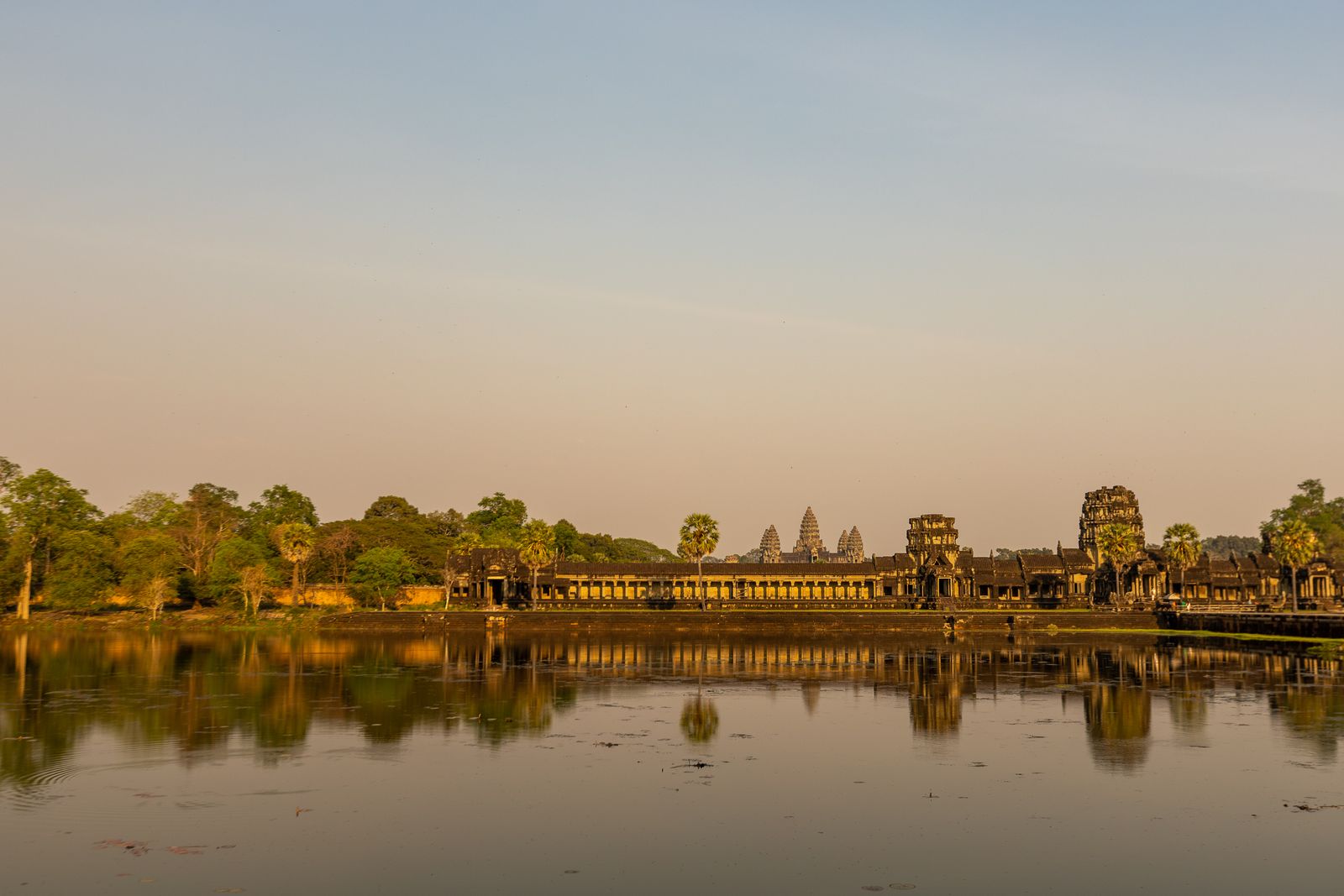
One pass, three prices, and a lot of confusing old advice online. This page is the short, current version: what the Angkor Pass costs in 2026, where the only valid places to buy it are, what it does and does not cover, and the timing tricks that save you a dawn queue and a wasted day.
Last updated: October 26, 2026 · Prices checked against Angkor Enterprise listings in October 2026
 By Sophea Khim · Host & Editor, Wander Cambodia
Buy the Angkor Pass from Angkor Enterprise only: $37 for 1 day, $62 for 3 days (any 3 days in a 7-day window), $72 for 7 days (any 7 days in 30 days). Most first-timers should buy the 3-day pass. Buy the day before if you want sunrise — see the sunset trick below. Start with our full Siem Reap & Angkor first-timer's guide for circuits and timing.
| Pass | Price | Validity | Best for |
|---|---|---|---|
| 1 day | $37 | That day only | One dawn-to-dusk highlights sprint |
| 3 days | $62 | Any 3 days within 7 days | Most first visits — with a rest day built in |
| 7 days | $72 | Any 7 days within 30 days | Slow travel, photographers, repeat visits |
$2 from every pass goes to the Kantha Bopha children's hospitals. Children under 12 enter free — bring proof of age. Foreign residents who have lived in Cambodia for two years or more may qualify for a separate free annual pass; apply with passport proof rather than assuming it at the gate.
There are exactly three valid routes: the official Angkor Enterprise online portal, the ticket office on Road 60 on the way to the park, and official self-service kiosks in Siem Reap. Your photo is taken / uploaded and printed on the pass.
Do not buy from a reseller, a hotel desk markup, or a lookalike website. Angkor Enterprise has warned in 2026 about fraudulent sites selling fake tickets. A cheaper “discount pass” does not exist — pricing is set, and a fake pass fails at the first checkpoint. That warning is also why our Cambodia scams guide tells you to pay only at official counters for entry and visas.
The pass covers the main Angkor Archaeological Park temples: Angkor Wat, Angkor Thom and Bayon, Ta Prohm, the small and grand circuits, Banteay Srei, and the Roluos group, among others. Checkpoints open at 5:00am; most temples run roughly 7:30am–5:30pm, with Angkor Wat open from 5:00am for sunrise and its upper Bakan level on stricter hours.
Separate tickets apply at some outlying sites. Recent listings price Beng Mealea at $10, Koh Ker at $15, and Phnom Kulen at around $20. Those prices can change — confirm at the ticket office on the day, and budget them separately from the pass. Boat trips on Tonlé Sap are also separate and vary by operator; agree the total before you board.
For what to wear and carry in the heat, see best sunscreen for Cambodia and buy before you fly. A guided day can add a lot of context to the carvings:
Book an Angkor sunrise small-group tour →
Affiliate link — we may earn a commission at no extra cost to you.
One day in Siem Reap? 1-day, start at dawn, small circuit only. Two to four nights? 3-day — it is $25 more than a single day and removes every hard choice. A week or returning later in the month? 7-day at $72 is only $10 above the 3-day and is the best value in the park. When in doubt, buy longer: upgrading mid-trip is not the system — a second pass is.
Here is how the 3-day pass usually plays out for a first-timer who follows the pacing advice in our Siem Reap guide. Day one is the small circuit at a normal hour — no dawn alarm on your first day in the heat. You see Angkor Wat with a guide or a good plan, walk the Bayon faces at Angkor Thom while the light is still kind, and finish at Ta Prohm before the worst of the afternoon. Day two is the sunrise day: pass already in hand from the day-before purchase, out of town by 4:30am, sunrise at the ponds, the temple itself while the breakfast crowd is gone, then the grand circuit's quieter temples — Preah Khan's corridors and Ta Som's single face tower — at a stroll rather than a march. Day three is the choice day, and the non-consecutive window is what makes it valuable: take a rest day in between if the heat wins, then use the final day for Banteay Srei's pink sandstone carving in the morning and one beloved temple revisited in late light. Three days, zero wasted motion, and no day that ends with you too tired to enjoy dinner.
Compare that with the 1-day sprint: the same highlights, but every decision is forced, the midday heat is non-negotiable, and a single rainy morning can erase a third of your only day. The $25 step up to three days is not upsell — it is insurance against weather, fatigue and the simple fact that Angkor is bigger than anyone pictures it. The park covers some 400 square kilometres including forest and reservoirs; nobody “does” it in a day, they sample it. A longer pass lets the sample become an experience.
Passes are priced in US dollars, the currency Cambodia runs on alongside riel for small change — our money in Cambodia guide explains the dual-currency habit and ATM fees so the ticket office is not your first surprise. Keep small notes for tuk-tuk drivers and water stops, carry the pass somewhere it will not be crushed or soaked in rainy season, and photograph it as a backup record (the photo copy will not replace a lost pass at a checkpoint, but it speeds up every conversation about one). If a checkpoint queue looks long, be patient and keep the pass out and ready — checks are routine, quick, and the same for everyone.
Finally, a word on expectations for the Bakan, Angkor Wat's upper level: it is the one part of the park with its own stricter regime — limited numbers, a firm dress code, closure on Buddhist holy days, and no entry for children under 12. Build it into a morning rather than making it the whole plan for a day, and you will never be disappointed by a closure you could not have predicted from town.
The Angkor Pass costs $37 for 1 day, $62 for 3 days and $72 for 7 days. The 3-day pass is valid for any three days within a 7-day window, and the 7-day pass for any seven days within 30 days — the days do not have to be consecutive. Children under 12 enter free with proof of age.
Only from Angkor Enterprise: its official online portal, the ticket office on Road 60 in Siem Reap, or an official kiosk. Passes sold by resellers, hotels or lookalike websites are not valid — Angkor Enterprise has warned about fraudulent sites, so use the official channel only.
Some outlying sites carry separate tickets. Recent official listings price Beng Mealea at $10, Koh Ker at $15 and Phnom Kulen at around $20. Check the current list when you buy, because what is bundled can change.
No. Your photo is printed on the pass and it is checked at park gates and at individual temples. It is personal, non-transferable, and lost passes are not replaced free.
A pass bought late in the afternoon, after about 4:45pm, is generally stamped to start the next day and lets you in that same evening for sunset without using up a day. It also means no ticket queue before a sunrise start.
Planning around the seasons? Our best time to visit Angkor Wat page answers when to come and how many days to allow.
One short email a week with what actually changed on the ground — no fluff, no spam.
Free forever · One email a week · Unsubscribe anytime
Visa rule changes, the best travel deals we find, and new guides — once a week, no spam.
Free forever · Unsubscribe anytime
 Wander Cambodia