Last updated: November 26, 2026 · By Wander Cambodia
 By Sophea Khim · Host & Editor, Wander Cambodia
Yes — for the right traveller. Stung Treng is worth one or two nights if the Mekong is one of your reasons for coming to Cambodia: it sits where the Sekong and Sesan join the big river near the Laos border, Sopheakmit Falls north of town is among the most powerful waterfalls in the country, and the town itself is an honest, untouristed river town with a good market and a fine dusk riverfront. It is not worth a detour on a short, sight-packed trip — there is no nightlife and no long list of attractions, and it is six to seven hours by road from Phnom Penh. Use it as a destination on a slow Mekong trip, or as the well-placed overnight on the way to Laos or Ratanakiri.
Ask whether a place is worth visiting and most guides answer with a list. The honest answer depends on what you travel for, and Stung Treng makes the division unusually clean. It has one major natural sight, one real river town, and almost nothing built for tourists. For the right traveller that is a strong hand. For the wrong one it is a bus stop with good light. This page says which is which, plainly.
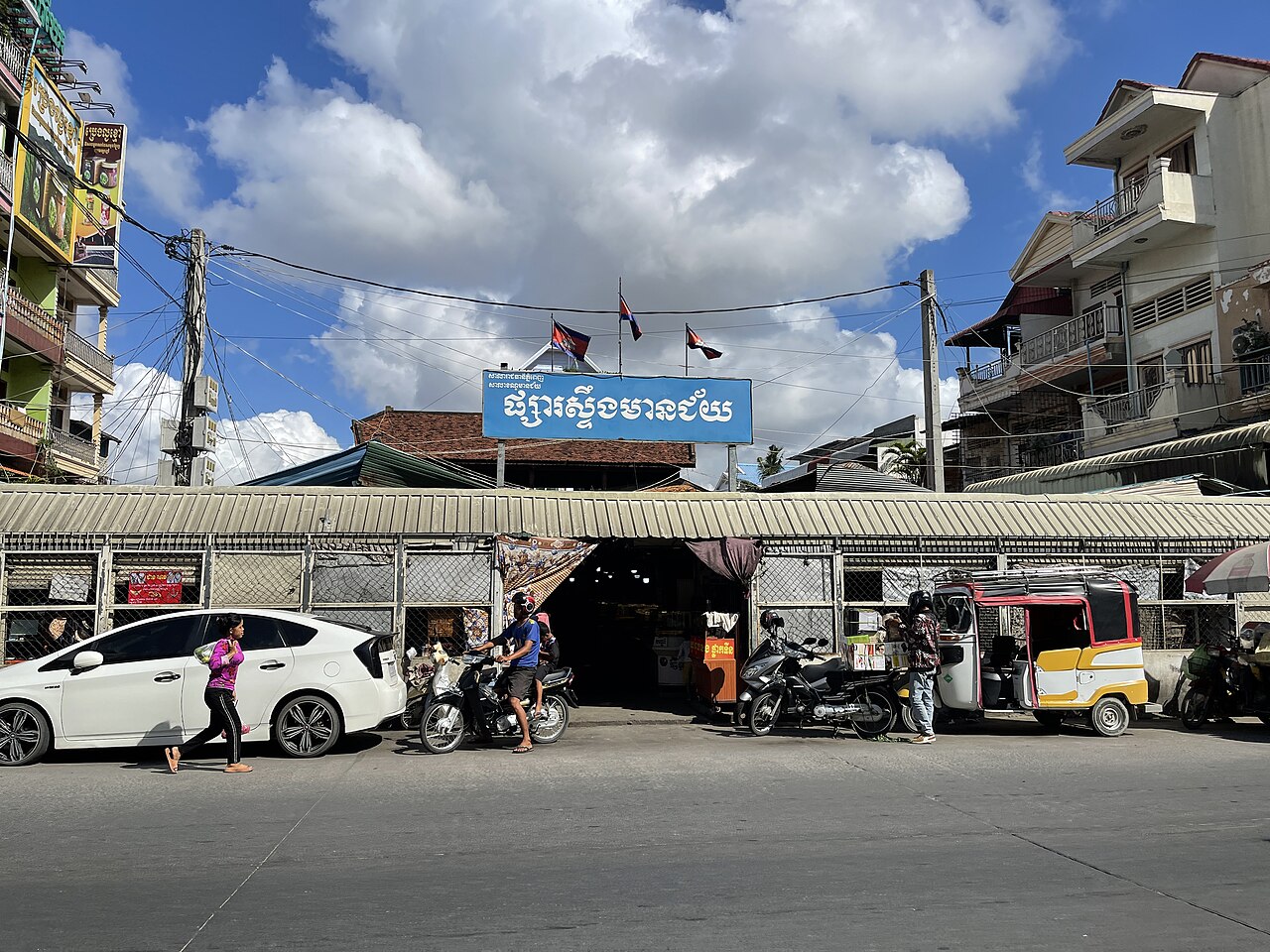
Start with the geography, because it is the whole argument. Stung Treng sits where the Sekong and Sesan rivers join the Mekong, near the Laos border — a three-river meeting in a province of islands, sandbanks and flooded forest. North of town the Mekong drops over the rock shelves of Sopheakmit Falls, the most powerful water in Cambodia, and the deep pools and flooded forest along the border stretch are dolphin country and bird country, visited by local boat rather than by tour bus. The town itself, covered in full in our Stung Treng guide, is the third part of the case: a working provincial capital with a morning market like the one in our photograph, a riverfront that belongs to the town rather than to visitors, and evenings that end early and quietly. Nothing here is staged for you. For travellers who have done the temples and the islands and want to see how Cambodia works along its biggest river, that is not a weakness. It is the product.
Now the other side, because it is real. Stung Treng is far — around six to seven hours by road from Phnom Penh, on the route our Phnom Penh to Stung Treng guide covers — and distance is a cost on a short trip. The town has no nightlife, a thin restaurant scene beyond Khmer staples and river fish, and no list of sights to work through: if your travel style needs a programme, you will finish Stung Treng by lunchtime and wonder what the fuss was. The falls are a half-day trip out of town, not a walk from your guesthouse, and in the driest months they run lower and quieter. Travellers crossing to Laos against a fixed onward booking should not force a second night here out of guilt. Take the overnight, enjoy the riverfront, and go. The town will still be here, being itself, whenever a slower trip brings you back.
Stung Treng suits three kinds of traveller. Mekong travellers, following the river through the country, for whom the confluence and the falls are destinations in themselves. Northeast travellers, using it as the humane pause between Kratie, Ratanakiri and Laos — the roads in our Kratie guide and Banlung and Ratanakiri guide all pass this junction. And slow travellers generally, who have learned that one quiet town teaches more than three sights. Do it in the right order: arrive by afternoon, riverfront at dusk, market in the morning, falls as their own trip, and onward after lunch. Carry cash, expect Khmer to carry further than English, and let the town set the pace. That is the whole method, and it works.
The point is fit. Stung Treng is worth visiting when the Mekong is one of your reasons for coming to Cambodia — and it is the wrong place to spend scarce days when it is not. Know which trip you are on, and the question in this page's title answers itself.
So the answer is not abstract, here is the day the yes case is built on. You wake early, while the market is still being set up, and you walk it with the town — fish coming off the boats, produce coming off the motos, breakfast stalls doing their morning trade. By mid-morning you are on the road north with a driver, the river never far away, heading for Sopheakmit where the Mekong pours over the rocks and the border feels close enough to touch. Back in town by mid-afternoon, there is time for the confluence — a boat if the river and the boatmen agree, or simply the bank where the Sekong runs into the Mekong and the water changes colour. Then the riverfront at dusk, grilled fish for dinner, and an early night while the town winds down around you. Nothing on that list is famous. Put together, it is one of the most complete Mekong days in Cambodia — and it is only available to travellers who stopped.
Yes, if your trip values the Mekong itself: a three-river confluence town, one of the most powerful waterfalls in Cambodia at Sopheakmit, flooded-forest river trips, and an honest provincial town with almost no tourism industry. No, if you are short on days and need dense sights — Stung Treng rewards one or two slow days, and travellers racing to Laos on a tight schedule should treat it as a well-placed overnight instead.
In town: the riverfront at the Sekong–Mekong confluence, the central market in the morning, and the Mekong bridge at dusk. Out of town: Sopheakmit Falls near the Laos border as the main day trip, boat trips into the flooded forest and dolphin pools north of town, and the junction roads themselves — south to Kratie, east to Ratanakiri, north into Laos.
One night covers the town and the evening riverfront. Two nights cover the town properly, with Sopheakmit Falls given its own morning. More than that suits travellers using it as a quiet base for the northeast's roads, or anyone who has learned that river towns repay slowness.
The falls are at their most powerful in and just after the rainy season, when the Mekong runs high and brown over the rocks. The dry season gives easier roads, visible sandbanks and islands in town, and calmer river trips. Each season shows a different river; neither is the wrong one, but waterfall-first travellers should aim for the wet-season tail.
By road. Buses and minivans run from Phnom Penh on National Road 7 via Kratie in around six to seven hours, covered in full in our Phnom Penh to Stung Treng guide. Travellers also arrive southbound from the Laos border at Trapaeng Kreal, and westbound from Ratanakiri across the Sekong Bridge.
One short email a week with what actually changed on the ground — no fluff, no spam.
Free forever · One email a week · Unsubscribe anytime
Visa rule changes, the best travel deals we find, and new guides — once a week, no spam.
Free forever · Unsubscribe anytime
 Wander Cambodia