Last updated: November 26, 2026 · By Wander Cambodia
 By Sophea Khim · Host & Editor, Wander Cambodia
Stung Treng has the same problem Pursat has, one province further from everywhere: the road goes through it, so people do too. Buses pause, travellers look out at a wide river and a quiet town, and the road takes them on to Laos or down to Kratie. The stop deserves better. This is the town where the Sekong and the Sesan pour into the Mekong, where the falls near the border are among the most powerful sights on the whole river, and where an evening on the riverfront costs you nothing and teaches you plenty.
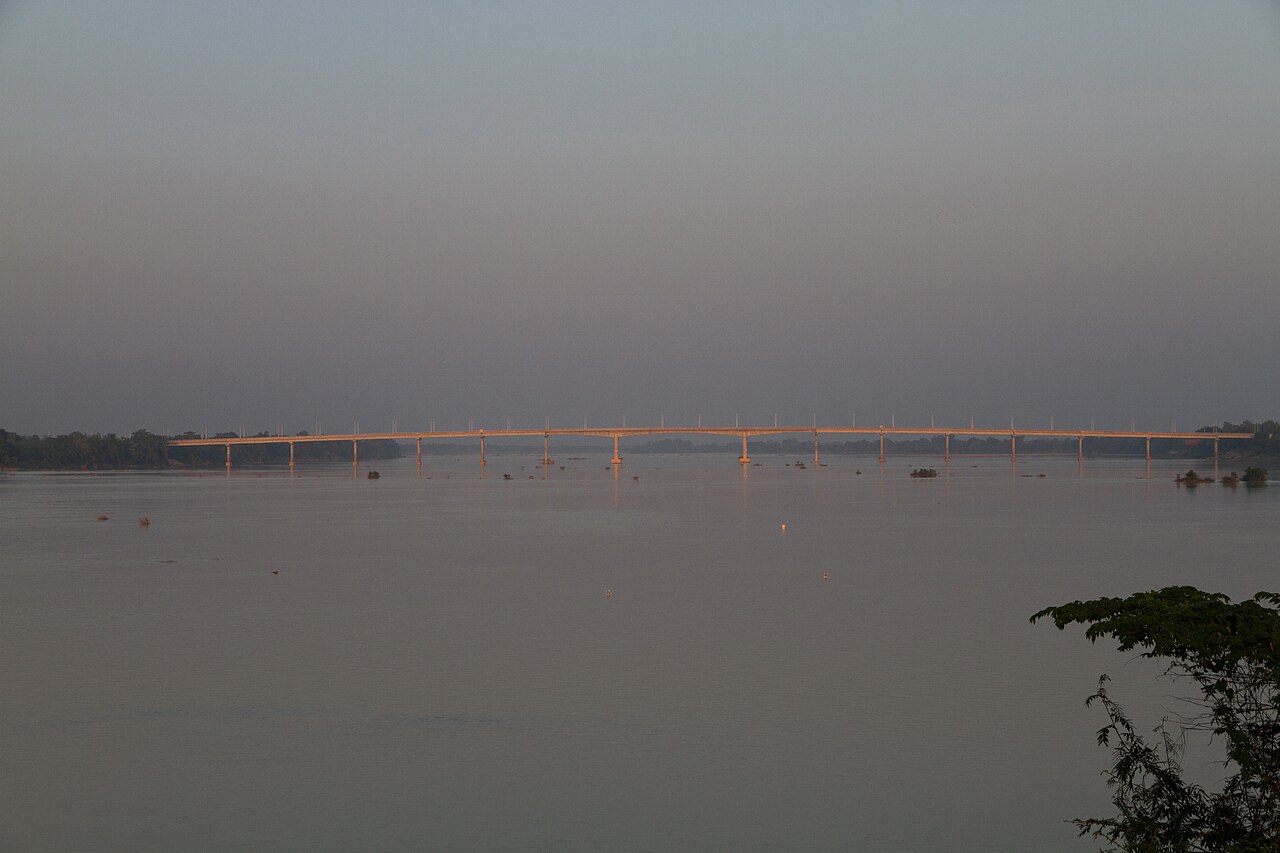
Geography explains Stung Treng. The town sits on the Sesan River near its confluence with the Mekong, with the Sekong joining the same system just upstream — three big rivers braiding into one wide water, scattered with islands, on the edge of the Laos border. For centuries that made it a trading point: Lao, Khmer and highland goods moving between the Annamite hills and the Cambodian plains passed through water like this. The modern town keeps the shape of that history. There are two bridges to know: the Stung Treng Bridge over the Mekong, in our photograph, which carries the road west and south, and the Sekong Bridge on the road east toward Ratanakiri. Between them sits a compact provincial capital — a market, a riverfront, government buildings, and streets that are busy in the morning and quiet by nine at night. Nobody will sell you a tour on the pavement. That is part of the point.
Do the town the way the town does itself. Start at the market in the morning, when it is a working market rather than a photo: fish from the rivers you can see from its doors, produce from the province, Lao and Vietnamese goods that have crossed the border the legal way and the river way. Then walk the confluence. Where the Sekong meets the Mekong the water changes colour and pace, boats work the channels, and in the dry season sandbanks and islands appear that the wet season hides. End the day at the bridge end of the riverfront for dusk — the light in our photograph is the ordinary evening here, not a special effect. Eat where the stalls are, expect river fish to be the strength of every menu, and carry cash: this is upcountry Cambodia, and our cards-versus-cash guide applies in full.
North of town, near the Laos border, the Mekong does something it does nowhere else in Cambodia at this scale: it drops, across a broad front of rock, in the rapids and falls called Sopheakmit — Lbak Khaon in Khmer. This is the same river system that makes the Khone Falls just inside Laos, and the Cambodian side has the same character: not one clean waterfall but a wide, loud, working stretch of white water over rock shelves, strongest in and after the rainy season and still substantial in the dry months. The trip out is part of it — a road north through river villages, with the border close enough to feel. Go with a local driver, go in the morning, and give it half a day rather than bolting it onto a travel day. On the same northern stretch, boatmen in the villages offer river trips into the flooded forest and the deep pools where Irrawaddy dolphins still live; go with quiet expectations and you will enjoy the river either way. Our Kratie guide covers the better-organised dolphin trip downstream, and the flooded-forest landscape up here is the wilder version of the lake world in our Tonle Sap guide.
Stung Treng is also a junction, and it is worth understanding the roads before you are standing at one. South, National Road 7 runs down through Kratie to Phnom Penh — our Phnom Penh to Stung Treng guide covers that road in full, in the other direction. North, the road reaches the Trapaeng Kreal border with Laos, the crossing our Laos–Cambodia border guide walks through step by step, with the southern Laos world of the 4,000 Islands on the other side. East, the Sekong Bridge starts the road into Ratanakiri and the highland world of our Banlung and Ratanakiri guide. A night in Stung Treng sits naturally at the centre of any of those journeys, which is exactly how to use it: not as a destination you build a trip around, but as the pause that makes a long northeast journey human.
The point is proportion, again. Stung Treng will not fill a week and does not pretend to. What it offers is a real Mekong town at a three-river meeting, a market morning, a bridge at dusk, and one genuinely major waterfall within a morning's drive. On a road where most people only stop for fuel, that is a good trade for one night of your trip.
Stung Treng is a small provincial town in Cambodia's far northeast, sitting where the Sekong and Sesan rivers join the Mekong, close to the Laos border. Most travellers meet it on the road between Phnom Penh and Laos, or coming south from the border at Trapaeng Kreal. It has historically been a transit town — this page is about why a night here is worth more than the transit suggests.
The town is the sight, in the provincial-capital way: the riverfront where the Sekong meets the Mekong, the central market under its blue sign, the bridge in our photograph at dusk, and streets that wind down early. This is not a town of attractions. It is a town for an evening walk, a market morning, and a slow look at how a Mekong trading town actually works.
Sopheakmit Falls — also written Sopheak Mitt, and called Lbak Khaon locally — is where the Mekong pours over a wide shelf of rock near the Laos border, north of Stung Treng town. It is the day trip that justifies the stop: a broad, powerful set of rapids and falls, most dramatic in and just after the rainy season. You go by hired car or moto with a local driver, and you combine it with the border-area river villages on the same road.
The deep pools of the Mekong north of town, toward the Laos border, are dolphin water, and boatmen in the river villages north of Stung Treng do take visitors out. Sightings are never guaranteed and the honest expectation is a quiet river trip with a chance, not a show. The better-known dolphin trip runs from Kratie, covered in our Kratie guide, and the two towns pair naturally on the same road.
One night if you are passing through, two if Sopheakmit Falls and a river trip are the point. Arrive in the afternoon, walk the riverfront at dusk, do the falls the next morning while the light and heat are manageable, and travel on after lunch. Travellers crossing to or from Laos often have the night forced on them by bus times — treat it as a feature, not a delay.
One short email a week with what actually changed on the ground — no fluff, no spam.
Free forever · One email a week · Unsubscribe anytime
Visa rule changes, the best travel deals we find, and new guides — once a week, no spam.
Free forever · Unsubscribe anytime
 Wander Cambodia