Last updated: November 23, 2026 · By Wander Cambodia
 By Sophea Khim · Host & Editor, Wander Cambodia
For a first visit, stay on or just behind the Riverside in Daun Penh: the Royal Palace, National Museum and riverfront promenade are walkable, and every price level is covered. For a longer or quieter stay, choose BKK1 — the leafy expat quarter south of the centre. For a local, residential feel on a return trip, look at Tonle Bassac or the Russian Market area (Tuol Tom Poung). The areas are only minutes apart by tuk-tuk; the difference is what your evenings feel like.
Phnom Penh is not a big city, but picking the wrong corner of it costs you an hour of tuk-tuks a day and the walkable evenings that make the capital likeable. The choice is really between four areas, and the right one depends on whether this is a first sightseeing trip or a longer, slower stay. Here is the plain version, area by area.
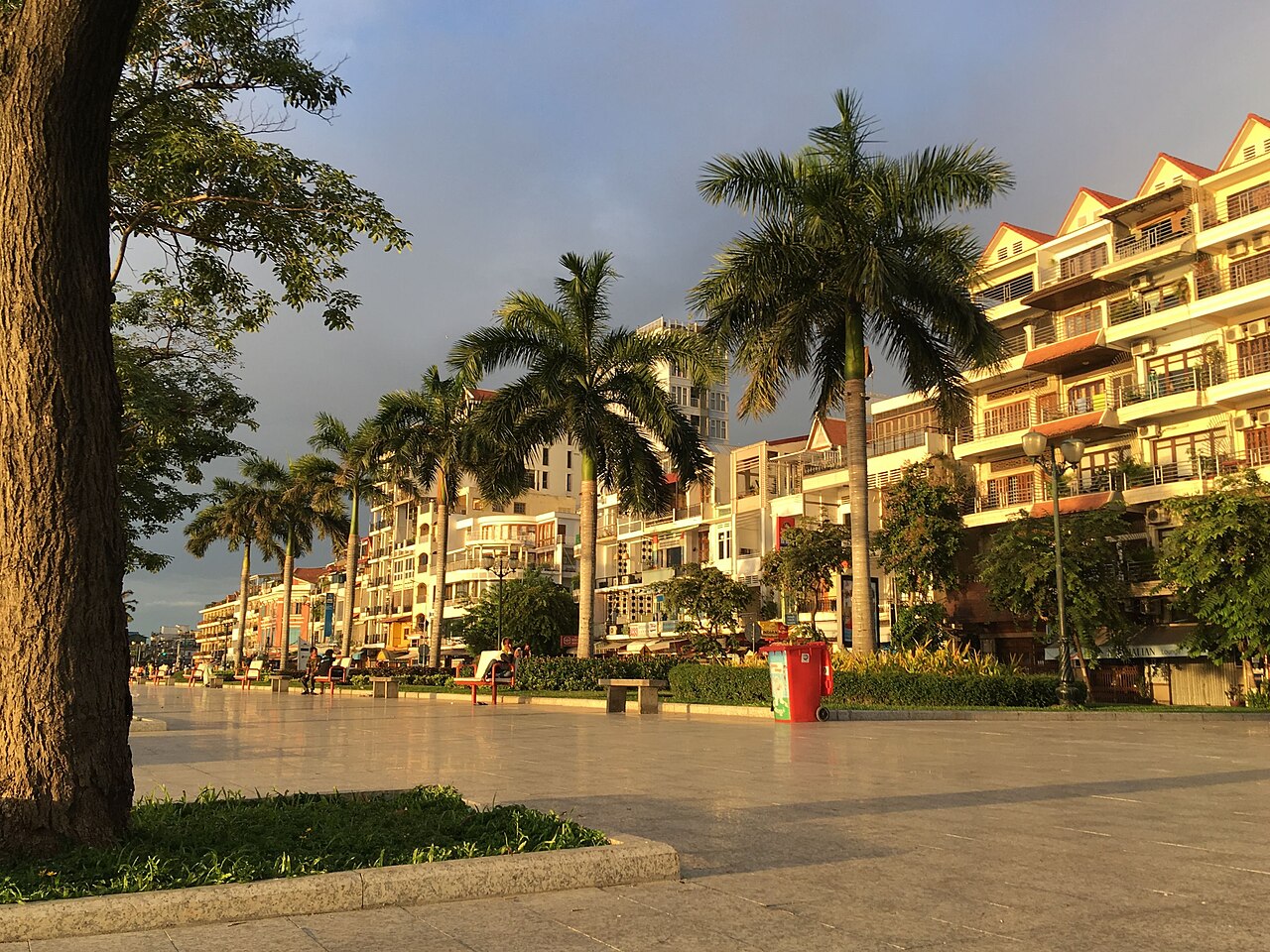
The riverfront strip — Sisowath Quay, where the Tonle Sap meets the Mekong — plus the streets a few blocks behind it, is where first-time visitors belong. The Royal Palace and Silver Pagoda are at its south end, the National Museum is two streets back, Wat Phnom stands at the north, and the promenade itself is the city's evening living room: families, food carts, exercise groups and the river going gold. Hotels run the full range here, from backpacker guesthouses on the side streets to the capital's grand old names on the quay itself. The honest downsides: it is the most tourist-facing part of the city, with the touts and the bar strip that come with that, and rooms facing the quay pay a view premium. Sleep one or two streets back and you keep the walkability and lose most of the noise.
Boeung Keng Kang 1, the grid of leafy streets south of the Independence Monument, is where Phnom Penh's embassies, NGOs and long-stay foreigners settled — and it shows in the best way: cafes that know how to make coffee, serviced apartments, supermarkets with imported goods, and streets you can walk without being offered a tuk-tuk every ten metres. If you are staying a week or more, travelling with children, or working while you travel, BKK1 is the comfortable base — our renting in Phnom Penh guide covers its apartment market for anyone staying longer still. The trade is distance: the palace and museum are a short ride rather than a stroll.
Between BKK1 and the centre, Tonle Bassac has grown into the city's cafe-and-small-hotel quarter — a good middle choice, walkable to more than BKK1 and calmer than the quay. Further south, Tuol Tom Poung around the Russian Market is the connoisseur's pick: a working market neighbourhood of shophouses, small restaurants and good-value guesthouses, where your neighbours are residents. Repeat visitors love it. First-timers on a two-night stop usually wish they were nearer the sights — the market itself is worth a morning either way, and it is the best souvenir stop in the city.
Avoid basing yourself out by the airport, on the far bank in Chroy Changvar for a short sightseeing trip (the bridge crossings eat your evenings), or in any listing that will not show you its street on a map — in Phnom Penh, the neighbourhood is the amenity. Two practical rules apply everywhere in the city. First, use the ride-hailing apps (PassApp and Grab) for tuk-tuks: the price is set before you ride, which removes the capital's one routine friction — our tuk-tuks and Grab guide explains the system. Second, whatever area you pick, you are at most a fifteen-minute ride from everything else on this page; Phnom Penh forgives. It does not forgive a hotel chosen only for its pool photograph in a district with nothing around it.
Price follows the same order as convenience. The Riverside carries the premium at the top end — the grand riverfront hotels price the view — but its side streets also hold some of the city's best-value mid-range rooms, because competition there is fierce. BKK1 mid-range and serviced apartments often give more space per dollar, which is why longer stays drift south. Tonle Bassac's small hotels sit between the two, and the Russian Market area is the budget-friendly end for guesthouses and apartments, with the market's food prices as a daily bonus. In every area, the same booking rule holds: a room a few streets from the headline landmark, in the same neighbourhood, is usually the same stay for noticeably less money. Judge listings by the street and the walk, not by the district label in the title — Phnom Penh's areas blur at the edges, and a BKK1 address can be closer to the riverfront action than a Riverside one.
The point is to match the base to the trip. Sightseeing for two to four nights: Riverside, a street or two back from the quay. A week or more, or travelling as a family: BKK1. A return visit, or a stay that is half living rather than visiting: Tonle Bassac or the Russian Market. Then spend the saved tuk-tuk hours where they belong — on the riverfront at dusk, with the city out walking. Our Phnom Penh guide plans what to do from any of these bases, the Techo airport guide covers getting in from your flight, and if the stay turns into something longer, the cost of living guide is the next read.
Riverside (Sisowath Quay and the streets behind it, in Daun Penh). You can walk to the Royal Palace, the National Museum and the riverfront promenade, the Wat Phnom end of the city is a short ride north, and the area has the deepest choice of hotels, restaurants and tuk-tuks at every price. For a first stay of two to four nights, nowhere else is close.
Boeung Keng Kang 1, south of the centre, is the established expat quarter: quieter, leafier streets, embassies, cafes and serviced apartments, and fewer touts than the riverfront. It suits longer stays, families, and anyone who has already done the sights — you trade walkable sightseeing for calm, and ride a few minutes to everything.
Tuol Tom Poung, around the Russian Market, is the local-feeling option: market streets, small cafes, good-value guesthouses and apartments, and a neighbourhood that runs on residents rather than tourists. It is a fine base for repeat visitors and longer stays, a less obvious one for a first short trip — the sights are a tuk-tuk ride away rather than a walk.
Two full days is the honest minimum — one for the palace, museum and riverfront, one for the Tuol Sleng museum and the Killing Fields at Choeung Ek, which nobody should rush. Three to four nights lets the city breathe and fits a day trip such as Oudong. Our Phnom Penh guide plans the days out.
No — stay in the city. Phnom Penh's airport, Techo International (KTI), sits well south of the city, and the transfer in is part of arrival day, covered in our Techo airport guide. Airport-area stays strand you away from everything you came for; even a late arrival is better spent riding in once and waking up in the city.
One short email a week with what actually changed on the ground — no fluff, no spam.
Free forever · One email a week · Unsubscribe anytime
Visa rule changes, the best travel deals we find, and new guides — once a week, no spam.
Free forever · Unsubscribe anytime
 Wander Cambodia