Last updated: November 25, 2026 · By Wander Cambodia
 By Sophea Khim · Host & Editor, Wander Cambodia
Riding a motorbike is the riskiest normal activity for visitors in Cambodia — traffic, not crime, is the top cause of serious traveller injuries. It is a reasonable choice only for people who already ride regularly at home, hold a licence that covers the bike, wear a helmet every ride, and carry travel insurance whose motorbike clause they have actually read, including medical evacuation cover. If you do not ride at home, do not learn here: tuk-tuks, Grab and hired drivers cover Cambodia cheaply and safely.
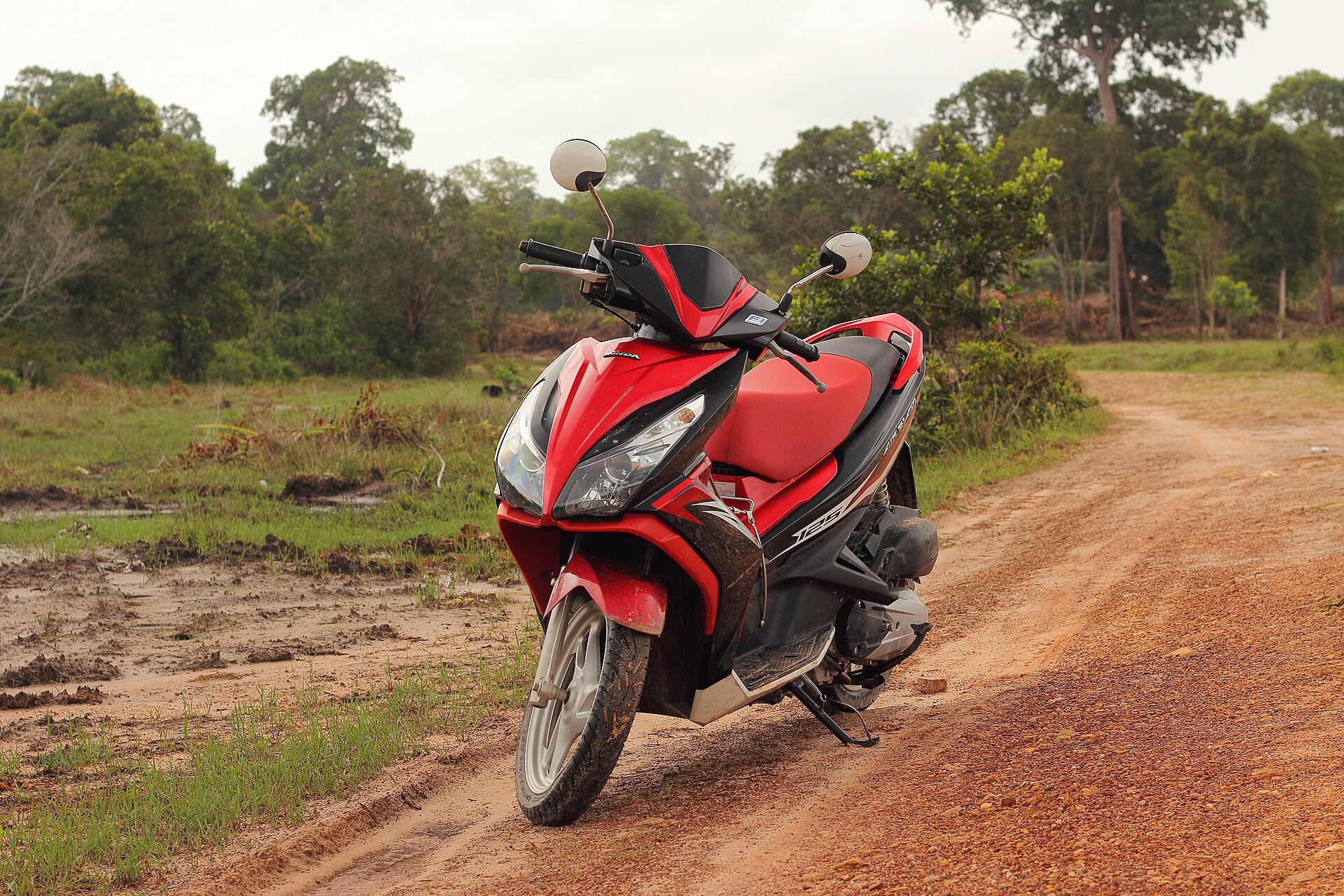
The scooter in our photograph is parked on an empty dirt road, and that is exactly how renting a motorbike in Cambodia is sold: freedom, countryside, nobody around. The photograph is real. It is also the least representative motorbike image in the country, because the riding that hurts people happens in traffic, at junctions, at night — in the Cambodia that does not fit in the brochure. This page answers the question in its title the way we answer everything: plainly, with the conditions named.
Ask hospitals and insurers what actually injures travellers in Cambodia and the answer is not the things visitors worry about. It is the road. Cambodian traffic mixes trucks, cars, motos, bicycles, carts and animals in a flow that runs on negotiation rather than rules: vehicles overtake into oncoming lanes expecting smaller traffic to yield, junctions work on confidence, and the vehicle coming toward you at night may have no lights. Add surfaces that go from new highway to broken laterite in a hundred metres, sand and gravel on corners, and rain that turns both into a skating surface, and you have the real risk profile. Our general Cambodia safety guide puts traffic first for the same reason. None of this makes riding impossible. It makes riding a skilled activity, and the honest dividing line in this whole topic is whether you already have the skill before you arrive.
Here is the misconception that costs people the most money. A rental shop handing you keys proves nothing except that the shop wants your deposit. Your legal and insured position is decided elsewhere: by whether you hold a licence that covers that bike, by whether you were wearing a helmet, and by the exact motorbike wording of your insurance policy. Insurers decline these claims every season, on paperwork, after the hospital bill has already landed. So the sequence matters. Before you ride anything, read your policy's riding clause — engine limits, licence requirements, helmet conditions, alcohol exclusions — and treat anything it does not clearly cover as uncovered. Our travel insurance guide works through the medical evacuation side of this, because a serious road injury in Cambodia often means Bangkok, and Bangkok means a bill that makes the licence question very concrete. If the paperwork does not line up, you are not insured with extra steps. You are uninsured.
Be blunt with yourself here, because nobody at the rental shop will be. If you do not ride regularly at home, do not start in Cambodia. If your only experience is a holiday scooter somewhere quieter, that is not experience, that is exposure. If you plan to ride between towns at night, or to drink and ride back, no licence fixes that decision. The good news is that skipping the bike costs you almost nothing in Cambodia. Tuk-tuks and app rides are cheap and everywhere in the cities, remork drivers know the temple circuits better than you ever will, and a hired car and driver for countryside days costs less than one night in a private hospital. Travellers who never touch a motorbike miss none of Cambodia. They just see it from a different seat.
For licensed, experienced riders, the rules are unglamorous and absolute. Helmet on every ride, however short, and insist on one for your passenger — bring or buy a decent one rather than trusting the rental shelf. Carry your licence and the bike's documents. Ride defensively in the literal sense: assume junctions are uncontrolled, assume the truck will take your lane, assume the dog, the cart and the child are about to move. Slow down in villages, always. Avoid intercity riding at night entirely if you can, and treat wet roads as a different, hostile surface. Keep the bike small and familiar rather than impressive. And keep your insurance documents and emergency numbers on your phone and on paper, because the time to discover what your policy says is before the ride, not after it. Riders who follow rules like these tour Cambodia every year without incident — the countryside in our photograph included. The freedom is real. It is simply earned, in advance, on paper and in skill, rather than discovered at the roadside.
The point is the division. For experienced, licensed, insured riders, a motorbike is a legitimate way to see this country. For everyone else it is the single most likely way to end the trip early and expensively. Know which rider you are before you take the keys — Cambodia will not grade you gently for guessing wrong.
It is the riskiest normal thing a visitor does here. Cambodian traffic is the leading cause of serious injury to travellers — mixed traffic, unpredictable overtaking, animals and unlit vehicles at night, and road surfaces that change without warning. Experienced riders with a proper licence, a helmet and valid insurance do ride here every day. Inexperienced visitors learning on a rental scooter are the profile that fills the hospital stories.
You need to be legal twice over: a licence that covers the bike at home, ideally carried as an International Driving Permit alongside it, and compliance with Cambodian rules for the engine size you ride. Rental shops will hand keys to almost anyone — that tells you about the shop, not about your legal position. If you are not licensed for the bike where your insurance comes from, assume you are not covered.
Only under conditions, and they are the whole game: most policies cover riding only if you hold the right licence, wear a helmet, and were not drinking — and many exclude larger engines or require a specific add-on. Break a condition and the claim fails, which is why our travel insurance guide treats the motorbike clause as the first thing to check, and why medical evacuation cover matters here.
No. If you have never ridden regularly at home, Cambodia is the wrong classroom: the traffic system assumes skills and instincts you have not built yet. Use tuk-tuks and Grab in the cities — cheap, plentiful, and someone else's problem — and hire a car and driver for countryside days. Riders who already ride at home, licensed and insured, are a different case and this page's rules are written for them.
Helmet on, every time, for rider and passenger. Licence and documents carried. No riding at night outside lit city streets if you can avoid it — unlit carts, animals and drunk drivers are a night problem. Never drink and ride. Assume every junction is uncontrolled, every truck will overtake into your lane, and every stretch of good road ends without warning. Ride slower than the traffic wants you to.
One short email a week with what actually changed on the ground — no fluff, no spam.
Free forever · One email a week · Unsubscribe anytime
Visa rule changes, the best travel deals we find, and new guides — once a week, no spam.
Free forever · Unsubscribe anytime
 Wander Cambodia