Last updated: November 3, 2026 · By Wander Cambodia
 By Sophea Khim · Host & Editor, Wander Cambodia
Direct answer: No — Cambodia does not require travel insurance for entry or for a visa, and nobody checks a policy at the counter. You should still never travel here without it, because serious medical cases are routinely evacuated to Bangkok or Singapore, and an air ambulance on that route can cost tens of thousands of dollars before treatment is even counted — look for at least $100,000 of medical evacuation and repatriation cover. Motorbike accidents, the most common serious claim in Cambodia, are covered only if you meet the policy's conditions: a licence valid for that class of bike, a helmet on, and not riding under the influence. Miss one condition and the claim can be denied in full.
That is the whole answer in one paragraph. The working detail follows — why evacuation is the real risk here, how the motorbike trap actually works, and what to check before you buy. The long-form companion is our Cambodia travel insurance guide.
Cambodia's cities have competent private clinics for the everyday list — dengue, infections, bad food poisoning, a stitched cut. What the country does not have, outside a small number of Phnom Penh facilities, is deep specialist care for the serious end: major trauma, complex surgery, intensive care over days. The standing practice for a serious case is a medical evacuation to Bangkok or Singapore, where the hospitals are world-class and priced like it. An air ambulance alone can run into tens of thousands of dollars; the Bangkok hospital bill comes on top. That is why the evacuation line of a policy — not the lost-luggage line, not the trip-delay line — is the number to read first. At least $100,000 of evacuation and repatriation cover is the sensible floor for Cambodia, and unlimited or very high medical cover behind it is better.
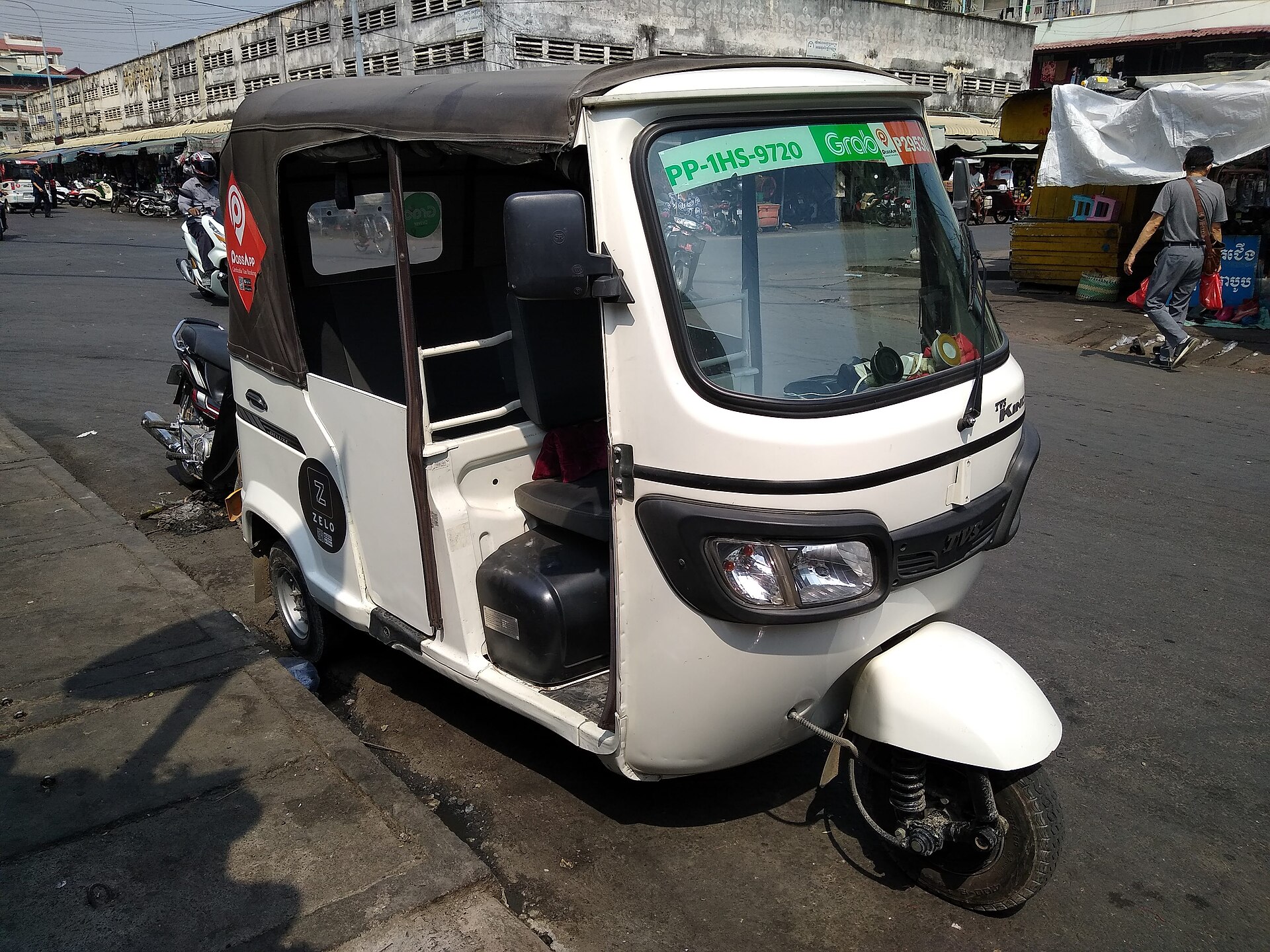
Most travellers in Cambodia ride something with two wheels: a rented scooter in Kampot, a moto taxi in Phnom Penh, a dirt bike in Mondulkiri. Most serious travel-insurance claims here start the same way. Insurers know this, so motorbike wording is where policies bite. The standard conditions are a licence valid for the bike's engine class (an international driving permit with the motorcycle category, or a home licence that covers it), a helmet worn at the time, and no alcohol or drugs involved. Engine-size caps also exist in some policies — a bike above the cap is uninsured no matter how good your licence is. Read that clause before you buy, not from a hospital bed. If you will not meet the conditions, the honest move is to not ride: tuk-tuks and ride apps, covered in our tuk-tuks and Grab guide, are cheap everywhere in Cambodia.
Four checks. Evacuation: at least $100,000, ideally far more, with repatriation included. Medical: high or unlimited cover that includes outpatient care — dengue and infections are treated as outpatient or short-stay cases all the time, and a policy that only pays for overnight hospital stays leaves the common claims unpaid. Motorbike wording: the licence, helmet and engine-size conditions above, matched to what you will actually ride. Start rules: most policies must begin before you leave home; a few providers let you start while already travelling, which suits open-ended trips — SafetyWing is the best-known of those, and we go through its Cambodia fit in our SafetyWing review. If you are staying long-term or retiring here, insurance is also part of the honest maths in retire in Cambodia — travel cover is a bridge, not a lifetime health plan.
Run the scenario insurers price against. A scooter accident outside Kampot: an ambulance to the nearest provincial hospital, stabilisation, then the decision every uninsured traveller dreads — a private air evacuation to Bangkok because the injury needs surgery the local facility cannot do. The flight alone can cost tens of thousands of dollars, payable or guaranteed before the aircraft moves. Then the Bangkok hospital: surgery, intensive care, days of recovery, billed at international private rates. Then a medical escort or a rebooking home. Travellers have crowdfunded six-figure sums for exactly this sequence, and the ones who could not raise it stayed where they were. Set against that, a policy with proper evacuation cover is one of the cheapest lines in a trip budget — and it is bought in ten minutes on a phone, including the providers that let you start while already travelling. This is also why the general safety picture in is Cambodia safe? and the insurance question are the same question: Cambodia is a reasonably safe country where the consequences of one bad hour are unusually expensive.
No. There is no insurance requirement for the eVisa, for visa on arrival, or for extensions. The requirement question and the should-you question have different answers: not mandatory, absolutely advisable.
Generally yes — illness is core medical cover, inpatient and (on a good policy) outpatient, minus any excess. Keep every receipt and report; insurers reimburse against paperwork, not stories.
Not necessarily. A small number of providers let you start a policy while already abroad, sometimes with a short waiting period before cover bites. What you can never do is insure an accident or illness that has already happened.
Requirements and cover points checked November 2026 against the site's researched insurance material. Policy wording varies by provider — the clause in your own policy document is the one that decides a claim. Affiliate disclosure: links to insurance providers on this page may earn us a commission at no cost to you.
One short email a week with what actually changed on the ground — no fluff, no spam.
Free forever · One email a week · Unsubscribe anytime
Visa rule changes, the best travel deals we find, and new guides — once a week, no spam.
Free forever · Unsubscribe anytime
 Wander Cambodia